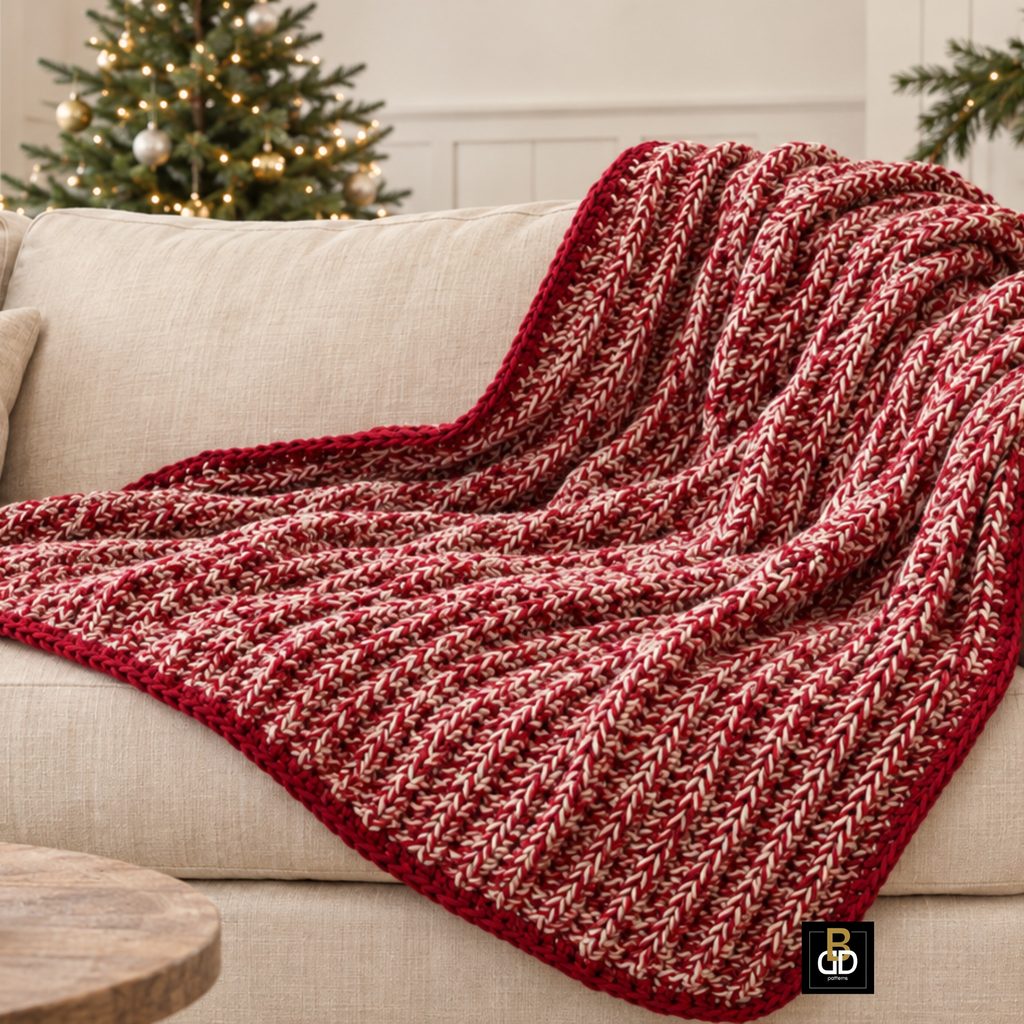

If you’re looking for an easy Christmas crochet blanket pattern that you can pick up without keeping track of a complicated stitch sequence, this is the blanket I’d make. It uses half double crochet, a one-row repeat, and two strands of worsted-weight yarn held together. I chose Claret and Off White for the body and used two strands of Claret for the border. The colors mingle in every stitch and remind me of a giant peppermint.
Hi, fellow crocheters! I’m Janet from BDD Patterns. I made my blanket to keep by the fireplace, but you can use the same technique for a smaller lap blanket or a wider throw. My fireside blanket took me about four hours. Your time will depend on your size, tension, and how quickly you crochet, so give yourself time to enjoy it, especially if this is your first project with two strands.

As an Amazon Associate I earn from qualifying purchases.
Why this one-row repeat works for beginners
The same basic stitch does almost all the work. You make half double crochets in the foundation row, work them into the back loop for most of each repeat row, and use regular half double crochets for the border. Once you can tell the first and last stitches from the stitches in between, you can put the video down for a few rows and crochet at your own pace.
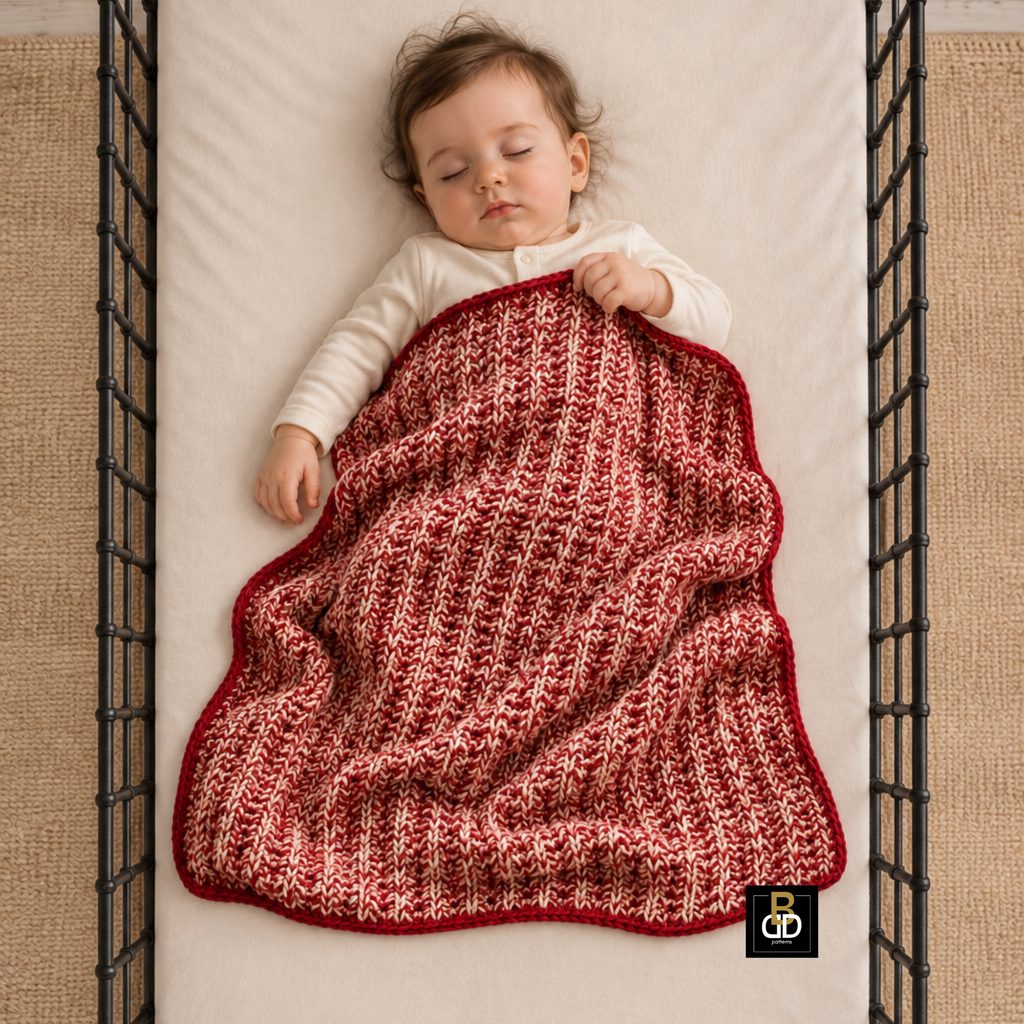
The texture comes from leaving the front loop unworked across the middle of each row. That loop remains visible and forms a ridge as you build the fabric. The blanket is reversible, with a knit-like look that shows up beautifully in the red and cream yarn. Working the first and last stitch through both top loops gives you a more substantial edge to work into when you’re ready to add the border.
The colors also make this a good first project for learning to hold two strands. You can see immediately when you have both Claret and Off White on your hook. Once that feels familiar, you can try two strands of the same color or pair two close shades for a subtler marled effect.
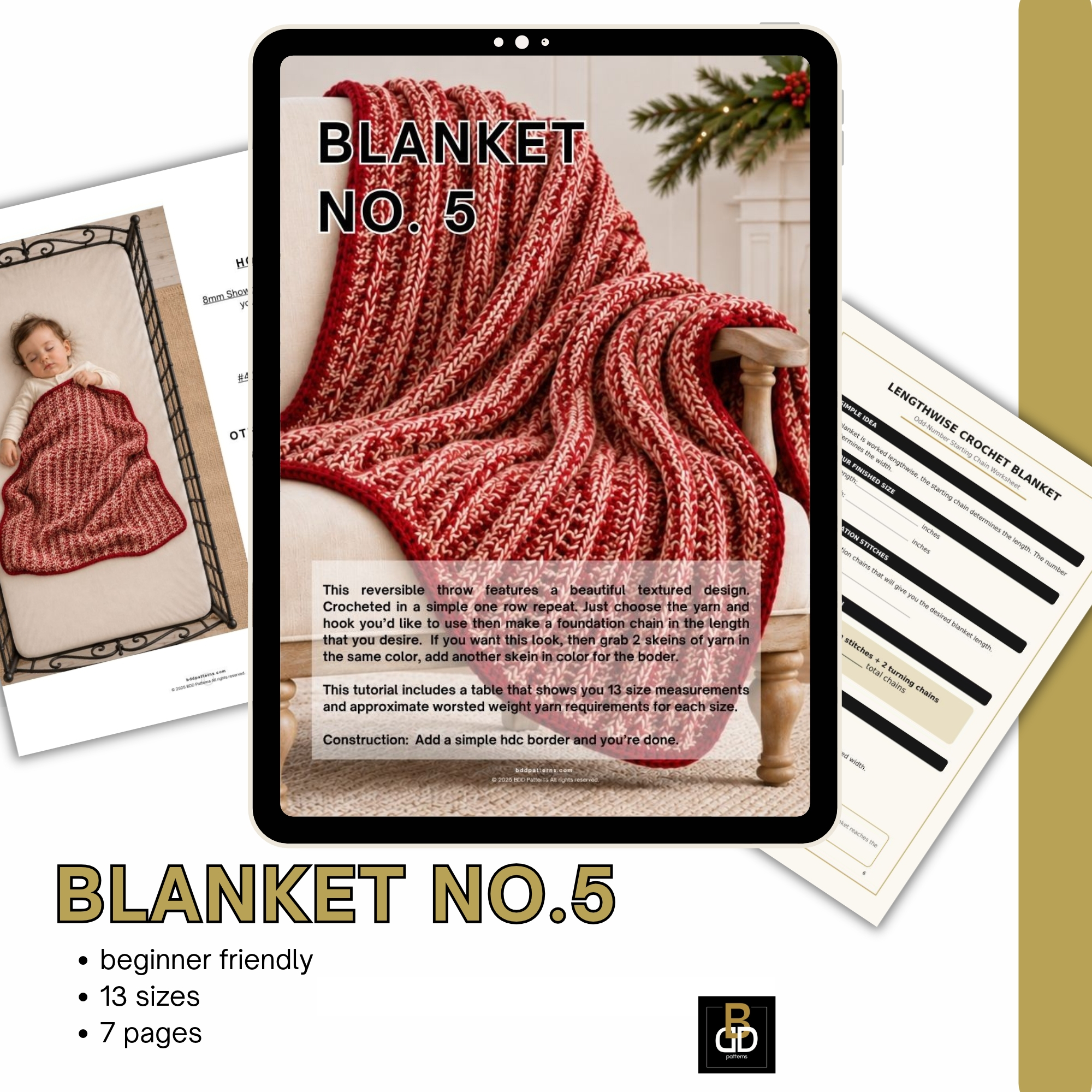
Yarn, hook, and supplies
For the blanket in the video, I used Caron One Pound, a worsted-weight yarn, in Claret and Off White. The skeins I used had 812 yards each. Start the body with one strand from each color. When you reach the border, keep the Claret strand you’re already using and bring in a second Claret strand from another skein. That gives you two strands of the same color for a solid edge. How much yarn you’ll use depends on the size of your blanket and your gauge.
Here are the supplies you will need
I used an 8 mm hook for a fairly dense fabric because I wanted a warm blanket for the fireplace chair. If your swatch feels stiffer than you’d like, try a 9 mm or 10 mm hook and compare the drape. I like a tapered hook for finding the back loop when there are two strands, but use the hook that feels comfortable in your hand. Test it with the yarn you plan to use before you commit to a full starting chain.
How to crochet with two strands of yarn
Set your two skeins next to each other and pull one strand from each. If you crochet straight from the skein, I like to pull from the center so the skeins stay put. If you prefer to wind your yarn into balls or cakes first, that works too. Hold the strands together, make one slip knot with both, and treat the pair as a single working yarn from that point on.
Pull a little yarn from both skeins before you need it. When one strand feeds freely and the other starts to tug, it’s easy to yarn over with only the loose strand. If you see just one color where you expect two, undo that stitch and work it again with both strands. I left those moments in the video so you can see how easily they happen and how quickly you can fix them.

A little twisting between colors gives the fabric its marled look. If the strands tangle enough to tug on your hook, pause and loosen them before you continue. When you make a half double crochet, you’ll see three working loops before the final pull-through. With doubled yarn, each of those loops is a pair of strands, so you may see six individual strands. Yarn over with both colors and pull through all three pairs together.

Great hooks chunky and bulky projects
Choose your blanket size before you chain
This blanket is worked lengthwise. Grab the written crochet pattern for a blanket sizing worksheetYour starting chain sets the length from one end of the blanket to the other. As you add rows, the blanket grows wider. If you’re making a lap blanket, decide how far down you’d like it to reach while seated. For a couch throw, think about whether you want enough width to wrap around your shoulders or just enough to cover your legs.
There is no stitch multiple to calculate for this repeat. Chain to your desired length, then add two turning chains. Keep the chain relaxed and measure it without stretching. If the finished dimensions matter, make a swatch first and measure the fabric after a few rows. A loose starting chain and finished stitches don’t always measure the same, and your border will add a little to both dimensions.
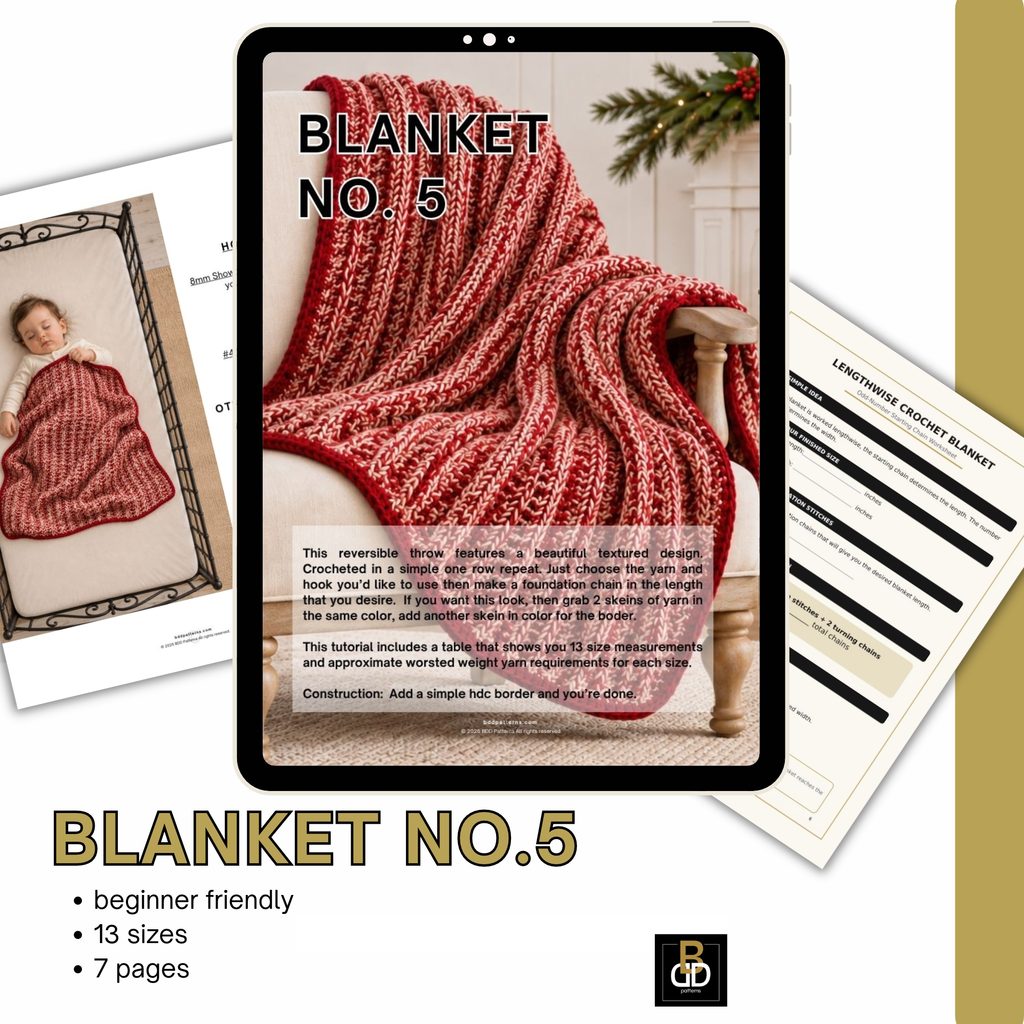
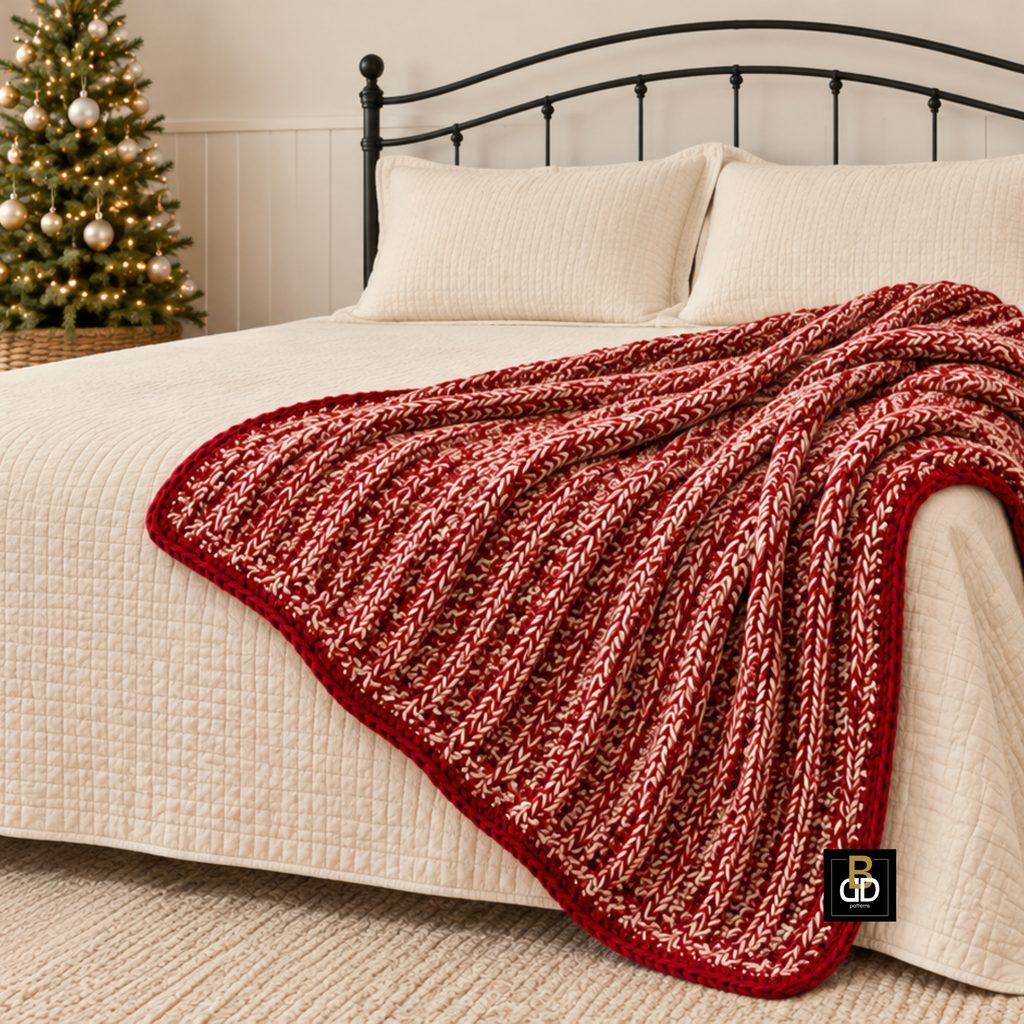
The lap blanket photo shows how the same stitch looks on a smaller scale. In the bedroom photo, a larger version drapes over the foot corner of the bed. If you’re deciding between sizes, measure a blanket you already own and like using. That gives you a concrete starting point before you buy yarn or make your chain.
Start the foundation row in the back bumps
Turn your starting chain slightly so you can see the little bumps on the underside. The front of the chain looks like a series of Vs. Each chain has a bump behind that V, sometimes called the back bar. Skip the first two chains from the hook and work your first half double crochet into the back bump of the third chain. Continue with one half double crochet in the back bump of each remaining chain.
To make a half double crochet, yarn over with both strands, insert your hook, yarn over with both strands again, and pull up a loop. Yarn over with both strands once more and draw through all three paired loops on the hook. Work slowly enough to see that both colors come through each time. At the end of the foundation row, chain two and turn.
Working into the back bumps leaves the Vs along the starting edge available for your border. It’s a small choice at the beginning that makes it easier to see where your hook goes when you finish. If the first few bumps are hard to find, lay the chain on a table and roll it gently toward you until the row of bumps comes into view.
Work the one-row repeat
Look at the V on top of the next stitch. The front loop is the side of that V closest to you. The back loop is the side farther away. Because your yarn is doubled, each side of that V contains two strands. When the instruction says to work into the back loop, insert your hook under both strands that make up that back loop.
- Work one regular half double crochet through both top loops of the first stitch.
- Work one back-loop half double crochet in each stitch across until one stitch remains.
- Work one regular half double crochet through both top loops of the last stitch.
- Chain two and turn to repeat the row. Stop when the blanket reaches your chosen width and follow the color change below on the final stitch.
Keep the same number of stitches from row to row. If you tend to miss the last stitch, put a locking marker in the first and last actual stitches as you work the next few rows. Count a row now and then, especially if one edge starts pulling inward or flaring out. It’s much easier to correct a missed stitch when it’s a row or two behind you.
Lay the blanket down flat when you check the width. The ribbing can stretch if you pull it, so let the fabric settle before you measure. If you’re making a smaller fireside blanket like mine, this is the point where you can stop and see how it sits on your chair before deciding whether to add a few more rows.
Finish with a solid Claret border
On the final stitch of the last body row, stop before the last yarn over and pull-through. Leave the Claret strand attached, cut the Off White strand with enough tail to secure, and pick up a second strand of Claret. Use the two Claret strands together for that final pull-through. Chain one, then work one regular half double crochet back into the same corner stitch. This is the starting corner, and you’ll finish it when you come back around.
Turn the blanket as needed to work down the first side. Place one half double crochet in each row end. Look for a firm spot with enough yarn under your hook to support the stitch. A large gap can leave a visible hole, so if the placement looks loose, take that stitch out and try a spot a little closer to the row end. Keep the border tension relaxed enough for the edge to lie flat.
Work three half double crochets in each of the other corners. Across the foundation edge, work regular half double crochets into the stitches left visible by the back-bump foundation. On the opposite side, go back to one half double crochet per row end. Work across the final edge using regular half double crochet through both top loops. When you reach the starting corner, add one more half double crochet there to finish the group of three. Fasten off and secure the remaining tails. You can crochet over some tails as you go and weave in any loose ends afterward.
If the border pulls inward along a side, look first at your tension and whether you skipped a row end. If it waves, check for extra stitches or stitches that are much looser than the surrounding ones. Set the blanket down after the first corner to see how it lies. That quick check can save you from undoing a whole round.
Make it a Christmas gift or an everyday throw
I love the red and cream for Christmas, especially beside a tree with warm white lights. The same blanket would look lovely in moss green and cream, taupe and off-white, or two strands of a single neutral if you want to leave it out all year. The technique gives you room to choose colors from the worsted-weight yarn you already have. Swatch with those strands together to see how they look before you start the blanket.
If you’re making this for someone who loves to sit by the fire with a cup of coffee, a lap size makes a thoughtful gift. A wider throw suits someone who likes to curl up on the sofa. Fold it so the solid border shows, tie it with a ribbon, and tuck in a handwritten note with the yarn’s care instructions. Those little details make a simple handmade gift feel personal.
If this is your first time crocheting with two strands, start with the little swatch from the video. Practice finding the back bump, turning, and working the regular stitches at the edges. Once you can see where your hook belongs, you’re ready to make the full blanket. I hope this stitch blesses you and gives you something beautiful to share. If you make one, tag @bddpatterns so I can see the colors you chose.