The Truth Beginners Need to Hear Before Crocheting Garments
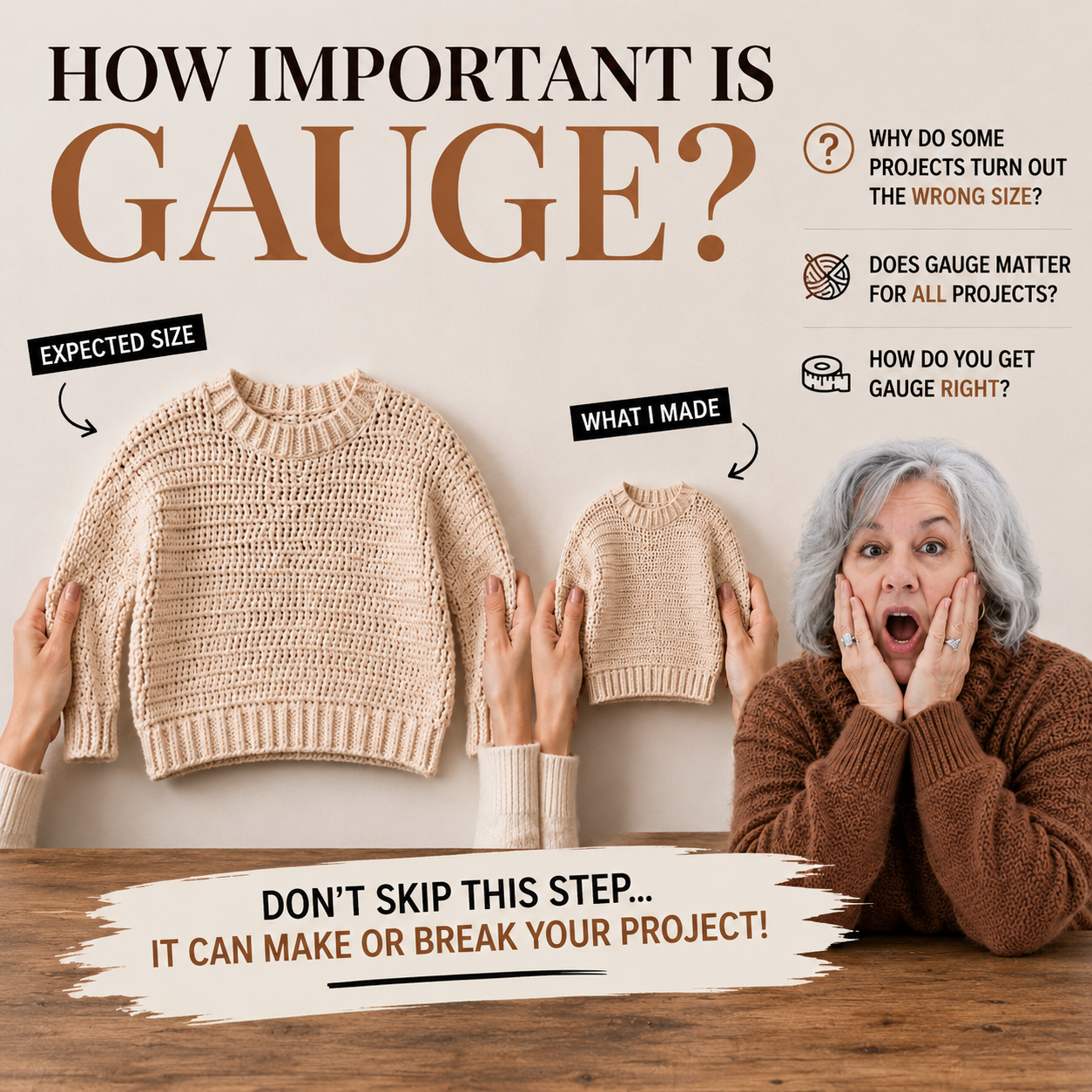
If you’ve ever finished a crochet project and thought:
- “Why is this sweater SO huge?”
- “Why does this fit my toddler instead of me?”
- “Why does mine look completely different from the pattern photo?”
…there’s a very good chance the problem was gauge.
Gauge is one of the most misunderstood topics in crochet, especially for beginners. Some crocheters ignore it completely. Others treat it like an intimidating math equation that makes crochet feel complicated before they even start.
But here’s the truth:
Gauge is not meant to frustrate you.
Gauge is meant to SAVE you.
And if you want to crochet garments that actually fit — sweaters, cardigans, tops, dresses, bralettes, pants, or even structured hats — understanding gauge is one of the biggest skills you can learn.
The good news?
You do NOT have to crochet exactly like everyone else to get good results.
You can hold your yarn differently.
You can tension differently.
You can even crochet a little tighter or looser than another person.
What matters is whether your finished fabric matches the intended measurements.
That’s what gauge is really about.
What Is Crochet Gauge?
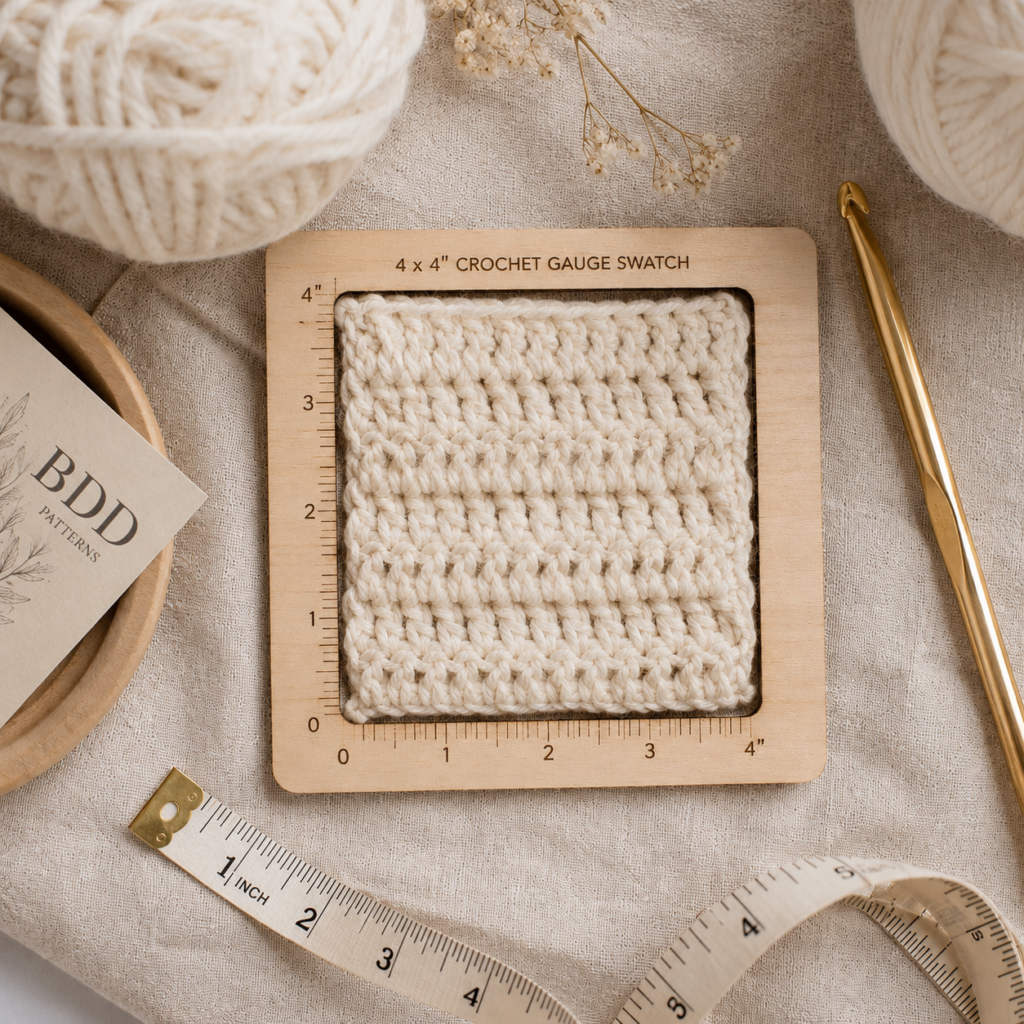
Gauge is simply the number of stitches and rows that fit into a specific measurement.
Most crochet patterns include something like this:
16 stitches x 12 rows = 4 inches
That means the pattern designer crocheted a swatch using a specific yarn and hook size, then measured it carefully.
If your stitches are:
- tighter
- looser
- taller
- shorter
…your finished project changes size too.
And sometimes dramatically.
A half-inch difference in gauge can completely change the outcome of a garment.
That sounds scary at first, but once you understand how it works, it actually becomes empowering.
Gauge Matters DIFFERENTLY Depending on the Project
This is where a lot of confusion happens online.
You’ll often hear people say:
“Gauge doesn’t matter.”
That statement is only partially true.
Gauge matters differently depending on what you’re making.
When Gauge Is More Forgiving
For projects like:
- blankets
- scarves
- dishcloths
- shawls
- oversized wraps
Gauge is usually more flexible.
If your blanket ends up slightly larger?
That’s rarely a disaster.
If your scarf is a little wider?
Probably not a problem.
This is why many beginners start with blankets. They’re forgiving and help build confidence.

When Gauge Matters A LOT
Garments are a completely different story.
Gauge becomes extremely important for:
- sweaters
- cardigans
- fitted tops
- bralettes
- dresses
- pants
- sleeves
- hats
Even small differences can create major fit problems.
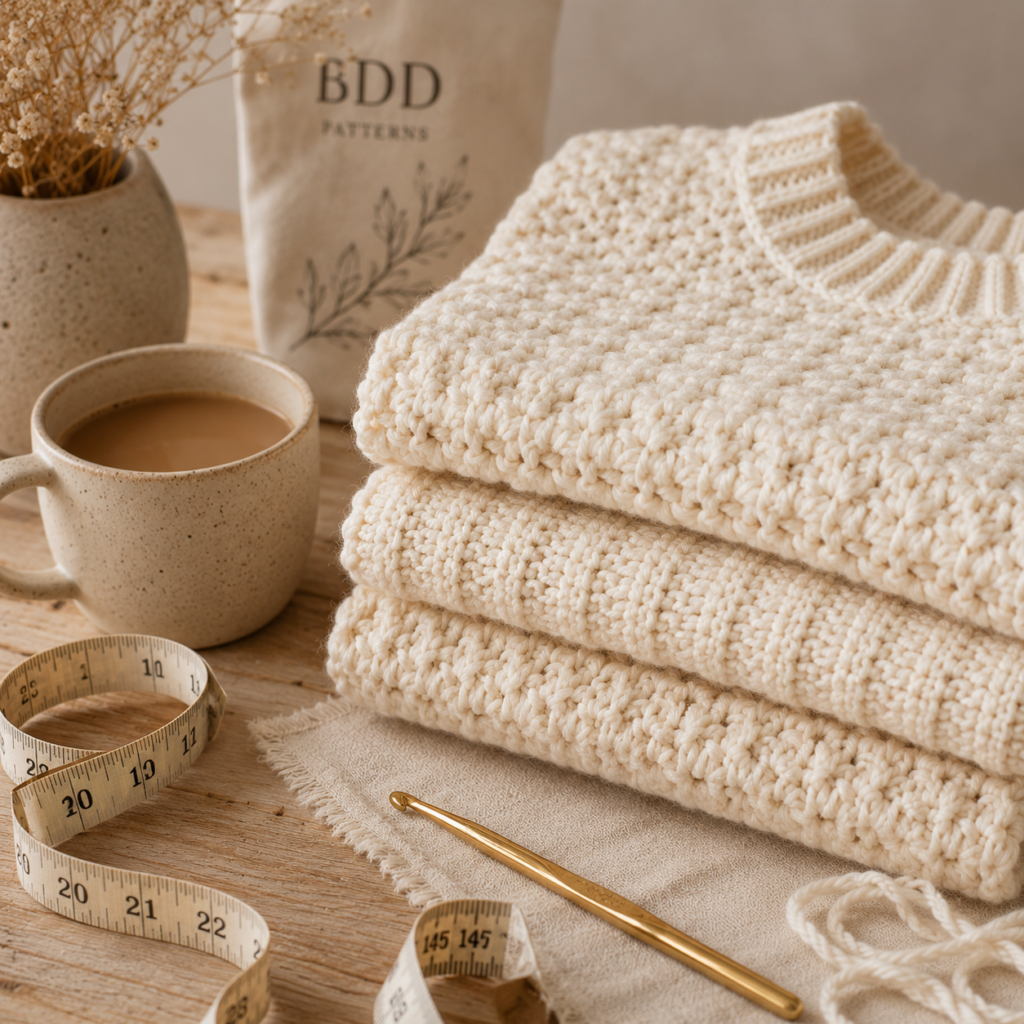
A sweater can become:
- too tight
- too oversized
- too short
- too long
- awkwardly shaped
- impossible to wear comfortably
And fitted crochet tops?
Those often require very accurate gauge.
A single inch can change the entire fit.
One of the Biggest Crochet Myths
One of the biggest myths in crochet is this idea that:
“There is only ONE right way to crochet.”
That simply is not true.
Some people:
- wrap yarn differently
- hold hooks differently
- crochet tightly
- crochet loosely
- tension yarn in completely unique ways
And honestly?
That’s okay.
The goal is not copying someone’s exact hand movements.
The goal is:
- correct stitch count
- correct structure
- correct measurements
If your finished fabric matches the intended gauge…
you’re doing it correctly.
This mindset is especially important for self-taught crocheters.
You do not need to crochet identically to someone on YouTube to become skilled.
Why Beginners Often Skip Gauge
Many beginners skip gauge because:
- they’re excited to start
- it feels boring
- it looks complicated
- they think it won’t matter
Unfortunately, skipping gauge often creates MORE frustration later.
There is nothing worse than spending:
- 12 hours on a sweater
- expensive yarn
- tons of effort
…only to realize it doesn’t fit.
A simple 15-minute swatch could have prevented that entire problem.
The Difference Between Tight and Loose Crocheters
Some crocheters naturally crochet tightly.
Others crochet loosely.
Neither is “wrong.”
But it DOES affect project size.
Tight crocheters often create:
- stiff fabric
- smaller garments
- shorter dimensions
Loose crocheters often create:
- oversized garments
- drapier fabric
- longer dimensions
This is why hook size adjustments matter.
How to Fix Your Gauge
Here’s the simple version:
If your gauge is TOO SMALL:
→ go UP a hook size
If your gauge is TOO LARGE:
→ go DOWN a hook size
That’s it.
This is completely normal.
Even experienced crocheters adjust hook sizes regularly depending on:
- yarn brand
- fiber type
- stitch pattern
- tension
- desired drape
Professional designers EXPECT crocheters to adjust hooks.
That’s one reason gauge is included in patterns in the first place.
The Best Way to Measure Gauge
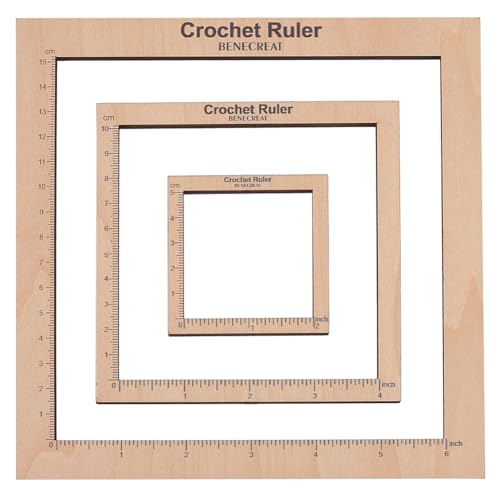
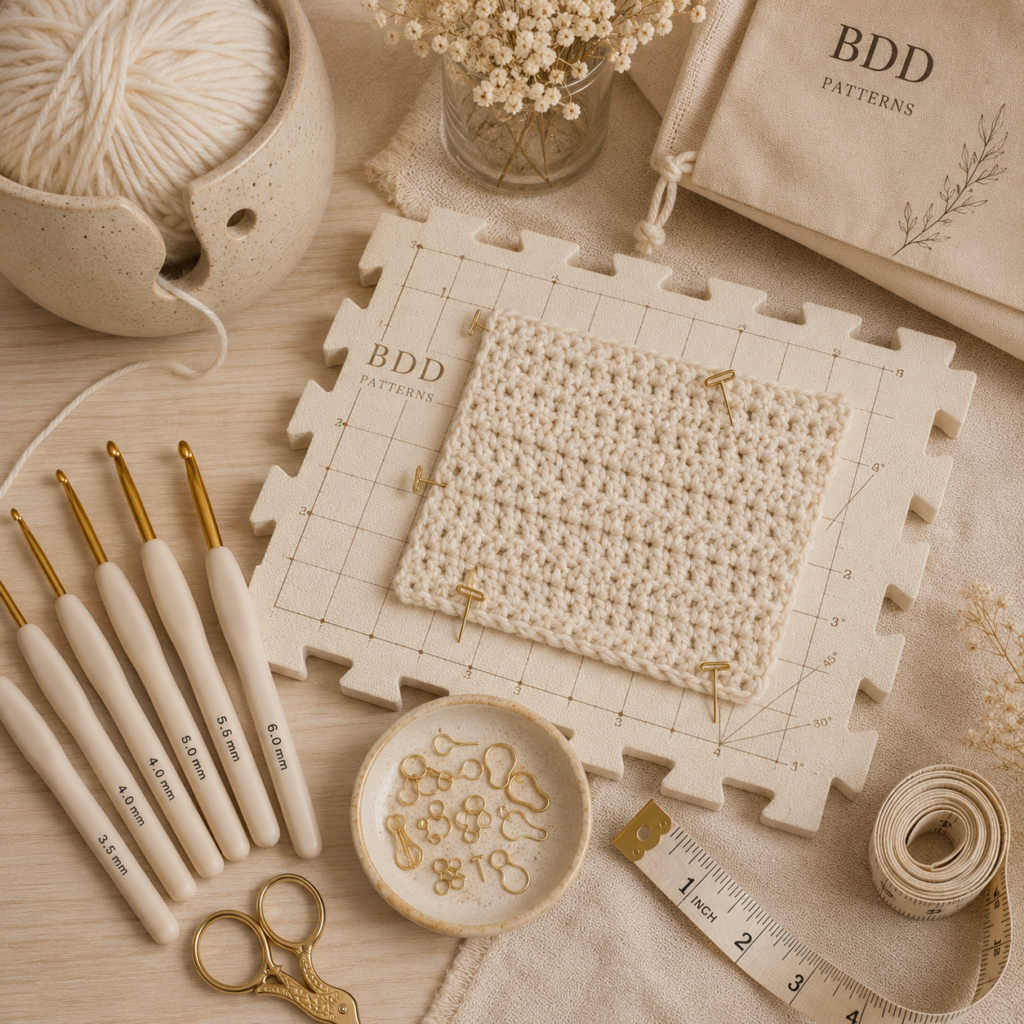
The best method is to crochet a swatch larger than 4 inches.
A tiny swatch can give inaccurate results.
Try making:
- 5–6 inches wide
- 5–6 inches tall
Then measure the CENTER area only.
Avoid measuring edges because borders and turning chains can distort the measurement.
Blocking Can Affect Gauge Too
Many beginners don’t realize this:
blocking can change gauge.
Some yarn fibers stretch after washing or steaming.
This is especially important for:
- cotton
- wool
- bamboo blends
Always block your swatch the same way you plan to block your finished garment.
That gives you the most accurate results.
Crochet Tools That Make Gauge Easier
Crochet Hook Set
A quality ergonomic crochet hook set makes gauge adjustments much easier because you can quickly switch hook sizes.
Look for:
- smooth hooks
- ergonomic handles
- clearly labeled sizes

Stitch Markers
Stitch markers are incredibly helpful when counting stitches in gauge swatches.

Blocking Mats
Blocking mats help flatten swatches for accurate measuring.


Yarn Bowl
A yarn bowl helps maintain even tension while crocheting.

The Emotional Side of Gauge
Honestly?
Gauge frustrates people because it feels like failure.
But it’s actually the opposite.
Gauge is information.
It’s simply telling you:
“Here’s how YOUR hands crochet.”
That’s incredibly valuable.
Once you understand your personal crochet tension, your confidence grows dramatically.
You stop guessing.
You stop hoping garments fit.
You start creating intentionally.
And that’s one of the biggest turning points in crochet.
Confidence Comes From Understanding
A lot of beginners think skilled crocheters never struggle with gauge.
That’s not true.
Experienced crocheters:
- swatch
- adjust hooks
- re-measure
- block
- test fabric drape
That’s part of the process.
Gauge is not a sign you’re bad at crochet.
Gauge is part of learning how YOUR crochet behaves.
Final Thoughts: So… Is Gauge Important?
For blankets?
Sometimes less.
For garments?
Absolutely yes.
If you want:
- sweaters that fit
- tops that shape correctly
- sleeves the right length
- wearable crochet garments
…gauge matters.
But remember this:
You do NOT have to crochet exactly like someone else to be “doing it right.”
Crochet is incredibly personal.
Different hands create different tension.
Different tension creates different gauge.
And once you learn how to work with YOUR gauge instead of fighting it…
everything becomes easier.
That’s when crochet starts feeling less frustrating…
and much more enjoyable.
As an Amazon Affiliate, Janet earns small commissions on qualifying purchases.