Posted on — Leave a comment

How To Spot An AI Crochet or Knitting Pattern BEFORE You Buy

how to spot an ai crochet or knitting pattern before you buy

Hi, fellow crocheters. It’s Janet from BDD Patterns. Thank you so much for stopping by today.

Lately, I’ve had more people reach out before buying one of my crochet or knitting patterns to ask, “Is this an AI pattern?” I hope this post helps you identify the slop.

When they tell me why they’re asking, I understand. They’ve bought patterns on Etsy or elsewhere that looked beautiful in the photos. Then they sat down with their yarn and hook and found stitch counts that didn’t add up or directions that left them wondering what to do next. After a few experiences like that, I can see why they’d want to ask a question before buying another one. Let me help you spot an ai written crochet or knitting pattern before you buy.

If you’ve ever asked me whether I crocheted the piece in a photo, I’m glad you asked. I know what it’s like to pick out yarn and look forward to making something. You want to know what you can expect before you start, and I’m happy to show you the piece I made.

I also want to be open about something. I use AI in parts of my business, including some of my images. If you’ve wondered how that fits with writing my own crochet patterns, here’s how I use it.

How I use AI to show my crochet projects

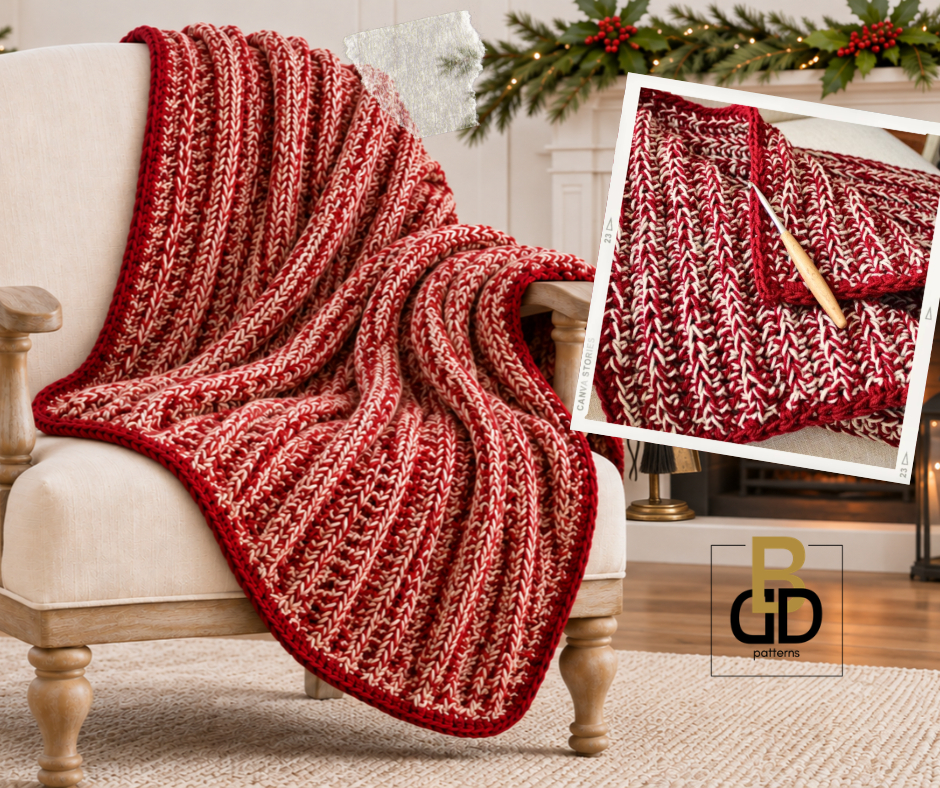
Think about a real estate listing that shows two photos of the same living room. In the first, the room is empty. In the second, it’s been virtually staged with a sofa, a rug, and a lamp by the window. The first photo lets you see the room as it is. The second helps you imagine what you could do with it.

That’s how I think about the styled images I use at BDD Patterns. My own photos show you the blanket I crocheted, right down to the stitches and the border. A styled image helps you picture that blanket draped over your favorite chair. Some days, the best place for me to photograph a blanket is wherever the light is good in my house. A styled image lets me imagine it in a cozy living room or a nursery without needing to have that room available for a photo shoot.

When working with AI images, I have had to ditch more than I use. And that’s okay. Unless the image is truly reflective of my finished piece, I will not under any circumstance use it.

I like giving you both views because they help you see different things. If you’re looking closely at the stitch texture, the seams, or the way a sweater hangs, I want you to have a photo of my actual sample to turn to. And if you want to know which image shows that sample, please ask.

Who writes my crochet and knitting patterns?

I crochet and knit my designs, and I write my own patterns. I always will.

Sometimes, I use AI as another set of eyes. It might point out a sentence that could be clearer or flag a stitch count for me to look at again. And sometimes I’m the one catching an error in what it suggests. If a change affects where you put your hook, how many stitches you should have, or how a piece is shaped, I go back to my notes and work through it with the crochet or knit in front of me.

There’s a lot you learn only when you sit down and make the piece. And that is why AI will never replace human designers. You can find out that the corner needs an extra stitch to lie flat, or that a seam makes perfect sense while you’re holding the two pieces but needs another sentence when you write it down. Those are the details I want to catch before my customer is sitting there with my pattern and their project on a hook or needle.
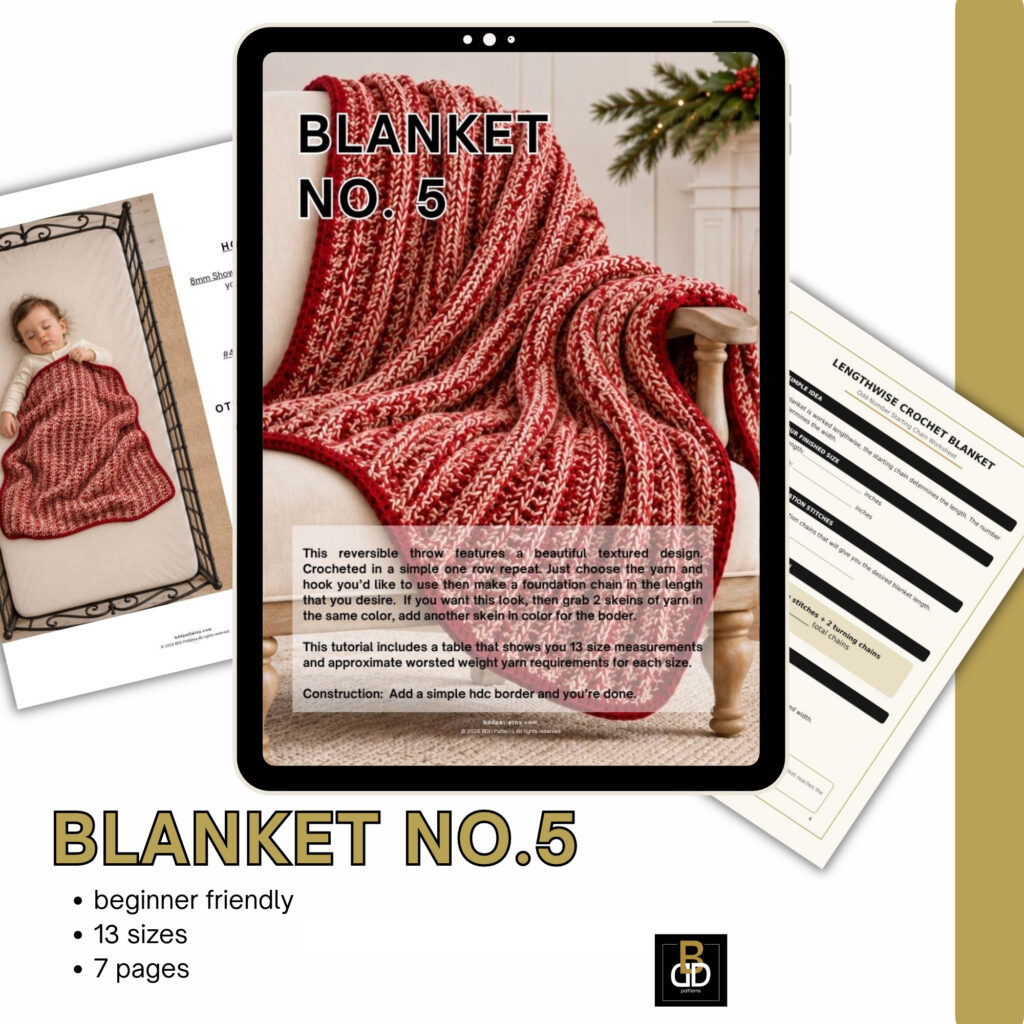
Blanket No 5 beginner crochet pattern

Why this matters to me as a crocheter, knitter and a designer

If you’ve ever pulled out the same row three times, you know how quickly a relaxing evening can turn frustrating. I especially think about the crocheter or knitting who’s just learning. When the stitch count keeps coming out wrong, it’s easy to think, I must be doing something wrong. Sometimes the instructions themselves need a correction. I’d hate for anyone to give up on a project, or on learning to knit or crochet, because of that.

I’m also concerned about copied patterns. A PDF can be brought into a tool like Canva, given a new cover, and made to look like it came from a different shop. I use Canva myself. What concerns me is when someone takes another designer’s pattern, changes how it looks, and sells it under their own name. A designer may have spent weeks crocheting the sample, reworking the measurements, taking photos, and writing directions they’ll be there to help you with. A new cover can hide who did all that work. Sadly, this is happening more and more. I have seen websites that have stolen my and other designers patterns more and more lately. It’s beyond maddening. They are even brazen enough to keep our watermarks on their lisiting images.

What I see firsthand is how these experiences affect trust. People who are excited to make something from one of my patterns now sometimes feel they have to ask whether I really made it. I want them to feel comfortable asking. You’re about to spend your money, choose your yarn, and give hours of your time to a project. It makes sense to want to know a little about the person who wrote the directions.

What I look for before buying a crochet pattern on Etsy or other marketplace sites

You usually can’t see the whole pattern before you buy it. A few details in the listing can help you decide whether it’s a good fit for you.

Look at the price and the shop’s history

I’ve seen crochet and knitting patterns under $3 on Etsy for years. Many of the ones I used to come across were vintage patterns, and you’ll still find those alongside sales and inexpensive patterns from independent designers. Lately, I’ve also noticed some listings that appear to use AI-written instructions at similarly low prices. When a pattern is much cheaper than similar designs, I take a closer look. Can I see a photo of the finished sample? Does the listing tell me what yarn I’ll need and how big the finished piece will be? Those details help me decide whether the pattern is worth buying, whatever the price.

I also like to see how long a shop has been around, because an established shop often gives me more history to look through. I can read older reviews, see what customers have made, and get a feel for the designer’s work over time. A newer shop can earn my confidence, too, with clear sample photos or a video showing the project in the designer’s hands. If I’m still on the fence, I’d ask, “Do you have a photo or tutorial that shows the piece you made from this pattern?”

Look for a photo of the crocheted sample

A close-up can show you how the edges are finished, what the stitches look like, or how the pieces join. If you’re unsure which photo shows the actual sample, you can ask, “Which photo shows the piece you crocheted?” You can also ask whether there’s a close-up or a video where you can see the finished project. It’s a friendly question that gives the designer a chance to show you their work.

The photo below is mine, not ai generated
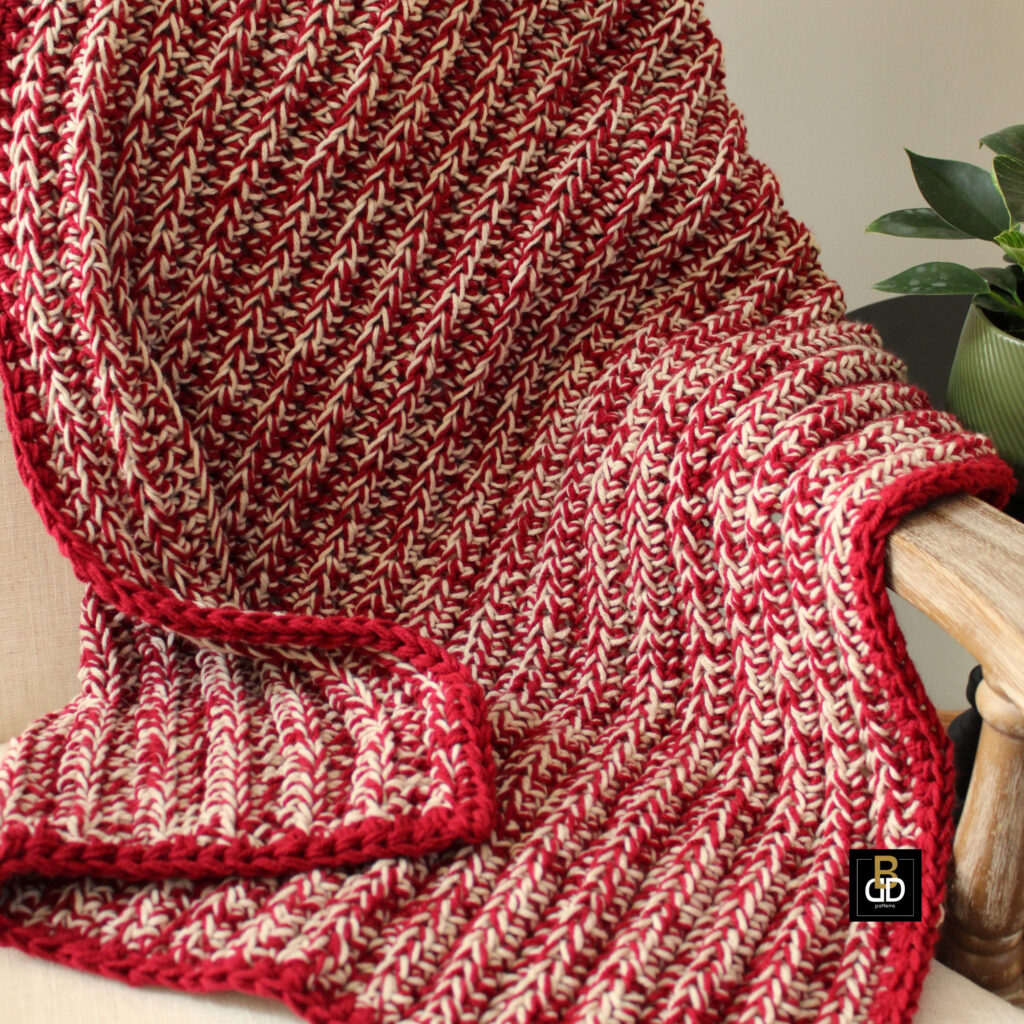
real crochet pattern image

Check the finished size and materials

For a blanket, I’d look for the finished width and length, the yarn weight, the hook size, and how much yarn the sample took. For a sweater, I’d want the finished garment measurements so I could compare them with a sweater I already like wearing. Gauge is especially helpful when you’re counting on a certain size or fit.

An unusual hook size can be intentional. A designer might choose a larger hook to give the fabric more drape. If you’re wondering whether the yarn you already have will work, that’s another good question to ask before you buy.

Read the preview if there is one

If the listing shows part of the instructions, see whether you can follow a row in your head. If one row ends with 42 stitches and the next tells you to work across 44, look for where the extra stitches are added. If you can’t find that step, ask. A typo can happen to any of us, and a specific question gives the designer something they can check for you.

Look for reviews from people who made that project

I love seeing a photo from someone who’s already made the pattern. I also look for comments about whether the instructions were easy to follow, how the sizing worked out, and whether the designer was helpful if the buyer got stuck.

A new pattern may have no reviews yet. In that case, I’d spend a little more time looking at the sample photos, reading any preview, or watching the tutorial if there is one.

Etsy’s Creativity Standards say sellers must disclose in the listing description when the item was created using AI. For a digital crochet pattern, the question I’d ask if I still had doubts is a simple one. “Did you crochet the sample using these instructions?” Etsy’s Creativity Standards

Get to Know the Designer Before You Buy
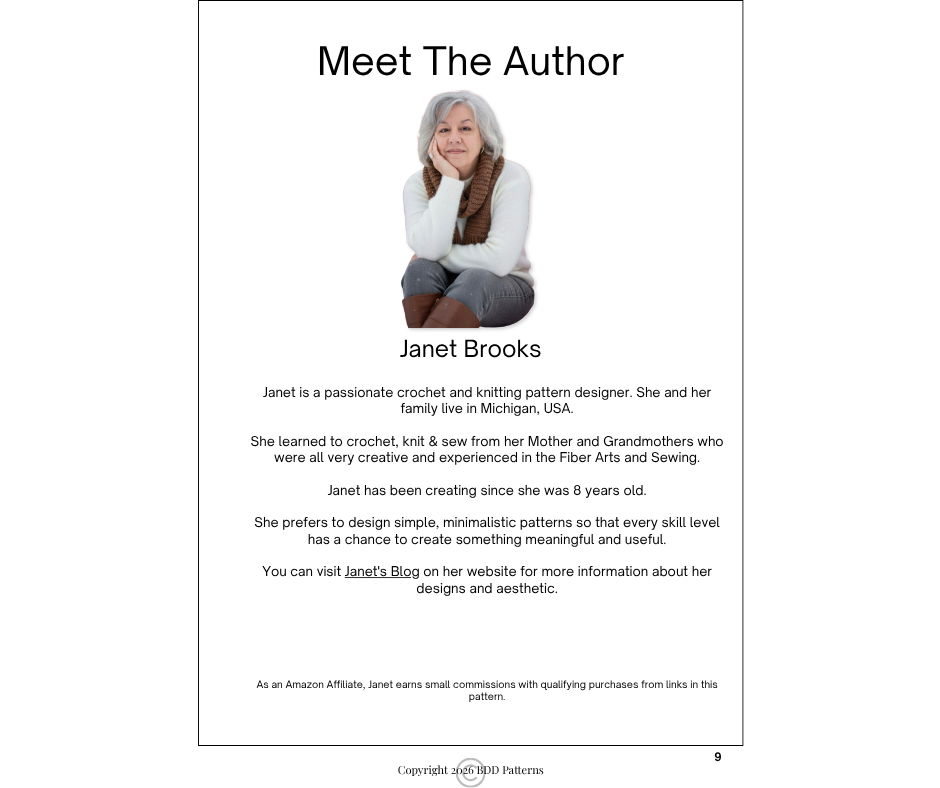
If you find a crochet pattern you love on Etsy, take a minute to see whether the designer has their own website. I’m grateful for the crocheters who first found me through Etsy. Thankfully, you can also buy my patterns directly at BDDPatterns.com. Buying from a designer’s own shop is another way to support their work. It also gives you a chance to look around, see what else they’ve made, and find out how to reach them if you have a question about the pattern.

I also like to see whether the designer has a YouTube channel. There’s something reassuring about watching a designer hold up the piece they crocheted or knitted, turn it over so you can see the back, and show you exactly where to put your hook. If there’s a video for the pattern you’re considering, watch it for a few minutes. You’ll get to see the actual project in the designer’s hands and hear how they explain the steps. That’s one of my favorite things about sharing tutorials on the BDD Patterns YouTube channel. You can get a feel for how I teach before you decide whether you’d like to make the project with me.

If you’ve already bought a pattern that’s giving you trouble

If you keep getting stuck in the same spot, send the seller the row or round number, the stitch count you’re getting, and a short description of what’s happening. Even something as simple as “I’m ending Row 6 with 42 stitches, and I can’t see where to put the first stitch in Row 7” gives them a place to start.

Sometimes a quick clarification gets you crocheting again. If there’s an error, ask for a corrected copy. If the instructions still don’t let you make the project as described, it’s reasonable to explain what happened and expect an honest solution.

And if you’re a beginner, please give yourself a little grace. I’ve been crocheting long enough to know that sometimes the most helpful thing a pattern can say is exactly where to put your hook next.

A little encouragement before you go

If you ever have a question about one of my patterns, please ask. I’m happy to point you to a photo of the piece I crocheted or take a look at a row that has you stumped. Questions from crocheters have helped me see where I can make my instructions clearer, and I appreciate it when someone takes the time to reach out.

And if you’ve made something from one of my patterns you loved, consider leaving a review with a photo. You’ll help the next crocheter picture what he or she can make, and you just might make the designer’s day. I’d love for you to tag BDD Patterns so I can see it, too.

Thank you so much for reading, and have a very blessed day.
Posted on

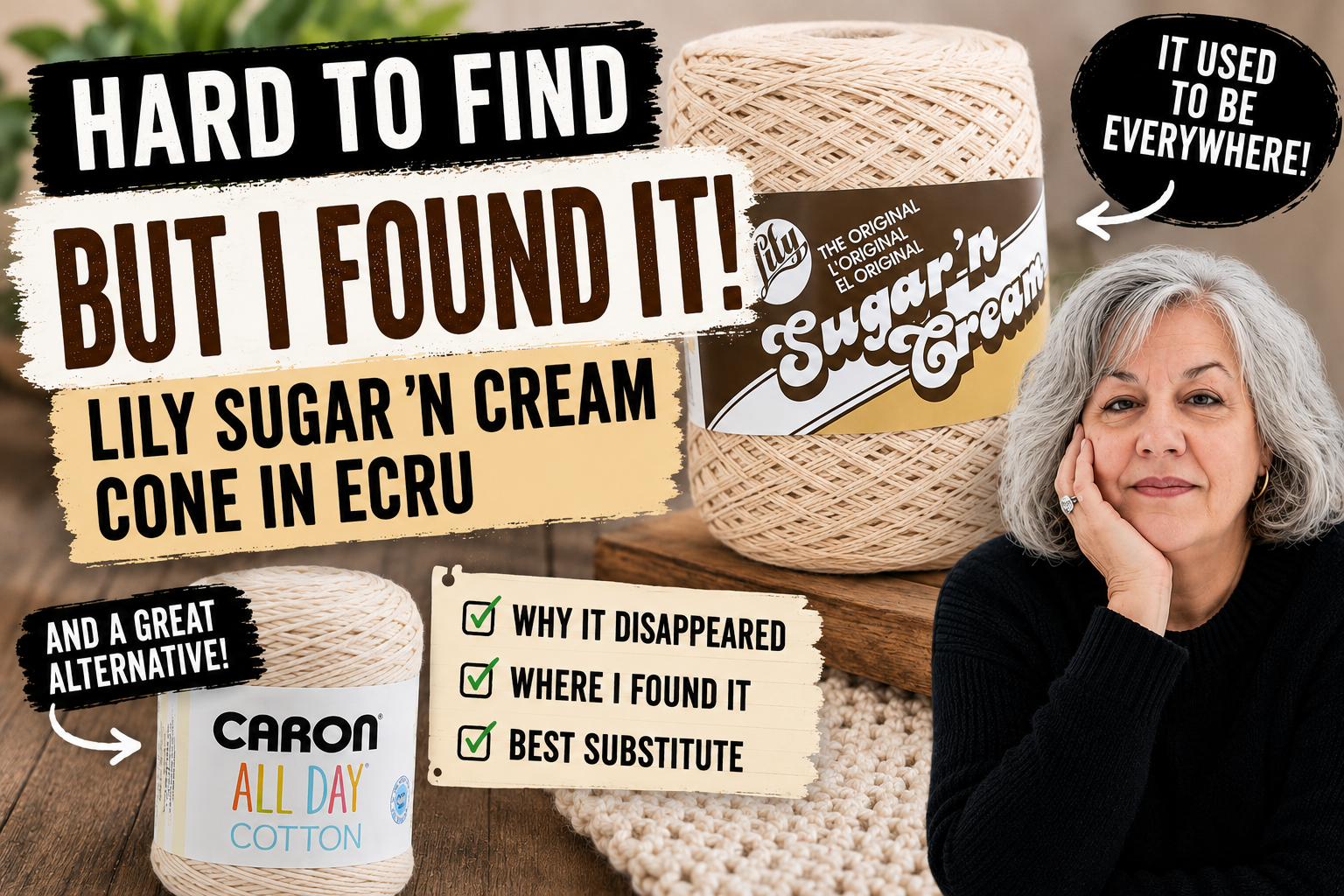
The Story of Lily Sugar’n Cream Ecru Cones: Why This Beloved Cotton Yarn Became So Hard to Find

what happened to lily sugar and cream ecru yarn

If you’ve been crocheting or knitting for any length of time, chances are you’ve used Lily Sugar’n Cream cotton yarn. For decades, it has been a staple in the crafting community, particularly for those of us who love creating practical, beautiful projects with 100% cotton yarn.

Dishcloths, market bags, kitchen accessories, baby items, home décor, and countless other projects have been made with this dependable yarn. Among the many color options available over the years, one color stood out as a favorite for many makers: Ecru.

Ecru wasn’t flashy. It wasn’t trendy. It wasn’t a seasonal color that came and went with the latest home décor styles. It was simply a beautiful, natural-looking neutral that worked with everything. It became a staple color in countless pattern collections and stash shelves across the country.

So, what happened?

Over the past few years, many crocheters and knitters began noticing something unusual. The once easy-to-find Lily Sugar’n Cream Ecru cones seemed to disappear from local store shelves and online retailers alike. What had once been readily available almost everywhere suddenly became increasingly difficult to find.

As someone who uses this yarn regularly, I wanted to dig deeper into the story behind its disappearance, explore whether quality concerns had been addressed, and most importantly, share where fellow makers can still find it.

A Long History in American Crafting

For many makers, Lily Sugar’n Cream represents more than just another cotton yarn option.

For years, it was known for using cotton sourced in the United States and manufactured in the United States. Many crafters appreciated not only its affordability and availability but also the consistency that came from purchasing a product they had trusted for decades.

Because it was carried by major retailers throughout the country, it became accessible to nearly everyone. Need one more cone to finish a project? Chances were good you could find it at your local craft store.

Its reputation was built over generations of knitters and crocheters who relied on it time and time again.

Changes in Ownership and Manufacturing

As many makers have discovered, businesses evolve over time. Lily Sugar’n Cream eventually became part of a Canadian-owned company, and manufacturing shifted from the United States to Canada.

Whenever a long-established product undergoes significant operational changes, consumers naturally pay close attention. In the yarn world, even subtle differences can matter greatly.

Yarn enthusiasts are incredibly observant. We notice differences in texture, thickness, twist, softness, absorbency, and consistency. It’s part of what makes us passionate about our craft.

Following the manufacturing transition, some users began reporting concerns about quality differences compared to previous versions of the yarn they had come to know and trust.

Addressing the Quality Concerns

It’s important to approach this topic fairly and respectfully.

Many makers shared experiences regarding variations they noticed after the manufacturing changes. Some mentioned inconsistencies between skeins, changes in texture, or concerns about the overall feel of the yarn.

At the same time, it’s worth noting that manufacturing transitions often involve adjustments and refinements. Product feedback plays an important role in helping companies identify areas for improvement.

Based on more recent experiences within the crafting community, many users feel that some of these concerns have been addressed. While individual experiences will always vary, there appears to be a growing sentiment that the yarn is performing more consistently than during the initial transition period.

The goal here isn’t to criticize Canada or the manufacturing changes themselves. Rather, it’s to acknowledge the reality that longtime users noticed differences during a period of transition and to recognize that improvements seem to have been made.

As crafters, we simply want confidence that the yarn we purchase today will perform similarly to the yarn we used yesterday.

The Great Ecru Cone Hunt

Perhaps the biggest challenge wasn’t necessarily quality concerns.

It was simply finding the yarn.

For years, Lily Sugar’n Cream Ecru cones were readily available through major retailers. Then, seemingly overnight, they became increasingly elusive.

Many makers found themselves asking questions like:

  • Has Ecru been discontinued?
  • Are the cones no longer being produced?
  • Is there a shortage?
  • Why can’t I find it anywhere?

Adding to the frustration was the fact that Ecru isn’t widely available through Amazon, despite many crafters turning there first when local stores don’t have what they need.

When Ecru cones did appear through third-party sellers, prices were often significantly higher than what many of us had grown accustomed to paying. In some cases, the cost had nearly doubled.

For budget-conscious makers, especially those creating larger projects requiring multiple cones, these price increases made a noticeable impact.

The Changing Craft Retail Landscape

Another important piece of this story involves the changing retail environment for fiber artists.

Many of us have watched the crafting landscape shift dramatically over the past several years.

The closing of Joann stores in various communities has had a profound effect on local access to yarn and crafting supplies. For countless crocheters and knitters, Joann wasn’t simply a retailer.

It was where we:

  • Felt yarn before purchasing.
  • Matched dye lots.
  • Found inspiration for new projects.
  • Picked up emergency supplies to finish gifts.
  • Connected with fellow makers.

The loss of physical craft stores creates new challenges for everyone who enjoys working with yarn.

Increasingly, makers are finding themselves relying on online retailers to access the supplies they’ve used for years.

Remembering Mary Maxim’s Michigan Roots

For many Michigan makers, Mary Maxim holds a special place in crafting history.

For years, Mary Maxim maintained a physical location in Port Huron, Michigan, serving as a destination for yarn enthusiasts throughout the region.

Many crafters have fond memories of visiting the store, browsing yarn aisles, discovering new patterns, and enjoying the experience of being surrounded by fellow fiber artists.

Today, Mary Maxim operates as an online retailer, adapting to the evolving retail environment just as many other businesses have had to do.

While there is certainly nostalgia attached to having a physical location to visit, their continued online presence provides an important resource for today’s makers.

And that’s where this story takes a hopeful turn.

Where I Finally Found Lily Sugar’n Cream Ecru Cones

After extensive searching through local stores and online retailers, I was relieved to discover that Mary Maxim Online currently carries Lily Sugar’n Cream Ecru cones.

For anyone who has spent months searching for this specific yarn color, finding a reliable source feels like uncovering hidden treasure.

The purpose of sharing this information isn’t to promote fear buying or encourage excessive stockpiling.

Rather, it’s simply to help fellow crocheters and knitters who have been searching without success.

If you’ve been postponing projects because you couldn’t locate Ecru cones, there may finally be a solution. I did reach out to them and as of date, they assured me that they haven’t received any notice of discontinuation or shortages. They have been blessed with enough ecru for everyone!

Considering Alternatives: Caron All Day Cotton

While many makers prefer sticking with their tried-and-true favorites, it’s always wise to have alternative options available.

One yarn that has caught my attention as a potential substitute is Caron All Day Cotton.

Although no substitute perfectly replicates another yarn’s exact characteristics, having alternatives can be incredibly helpful when availability becomes unpredictable.

Factors to consider when evaluating substitute yarns include:

  • Fiber content
  • Weight classification
  • Texture and softness
  • Stitch definition
  • Project requirements
  • Overall yardage
  • Cost effectiveness

For those unable to find Lily Sugar’n Cream Ecru, Caron All Day Cotton may be worth exploring depending on your specific project needs.

As always, creating a gauge swatch before beginning larger projects is highly recommended when substituting yarns.

Why This Matters to the Crafting Community

To someone outside the crafting world, it might seem unusual to devote so much attention to a single yarn color.

But makers understand.

The supplies we use become part of our creative process. We build patterns around them. We recommend them to friends. We teach beginners using them.

When a trusted product becomes difficult to obtain, it affects more than just shopping convenience.

It impacts:

  • Pattern planning
  • Project consistency
  • Budgeting
  • Teaching resources
  • Creative confidence

Finding reliable access to beloved materials helps preserve the joy of making.

Supporting One Another Through Change

The crafting community has always been remarkably resilient.

We’ve adapted to discontinued yarns, changing dye lots, store closures, rising costs, and evolving trends.

Throughout it all, makers continue sharing information, offering alternatives, and helping one another succeed.

This story isn’t really about a single cone of Ecru yarn.

It’s about community.

It’s about passing along helpful information that may save someone hours of frustration.

It’s about acknowledging that change happens while remaining hopeful that solutions exist.

And perhaps most importantly, it’s about remembering that the heart of crafting has never been found solely in the materials themselves.

It’s found in the creativity, generosity, and connection shared among makers everywhere.

Final Thoughts

If you’ve been searching high and low for Lily Sugar’n Cream Ecru cones, know that you’re certainly not alone.

Many crocheters and knitters have noticed their disappearance from familiar shelves and online marketplaces. While manufacturing transitions and retail changes have created challenges, there are encouraging signs that this beloved staple remains available for those who know where to look.

I was genuinely excited to discover that Mary Maxim currently offers this hard-to-find yarn, and I wanted to share that information with the crafting community.

My hope is that this saves you some time, reduces frustration, and helps you get back to doing what you love most: creating beautiful handmade projects.

Have you been searching for Lily Sugar’n Cream Ecru cones? Have you tried the newer versions of the yarn or discovered alternative sources?

I’d love to hear about your experiences in the comments below. Our shared knowledge helps strengthen this amazing crafting community we all value so much.

Happy crocheting and happy knitting!

WOW, just on week after receiving my yarn, Mary Maxim is out, unbelieveable. I have reached out to them and am awaiting a response…until then