Posted on

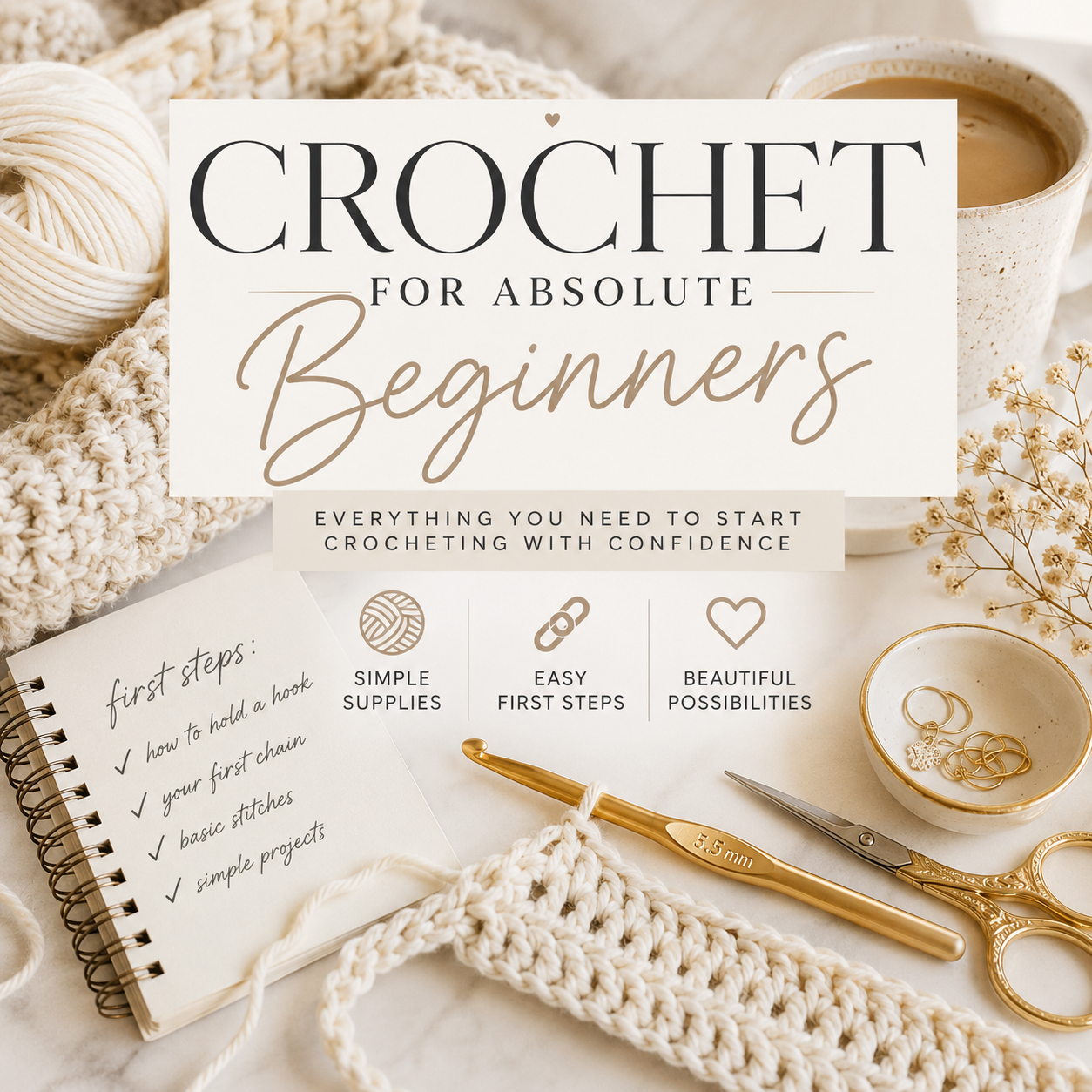
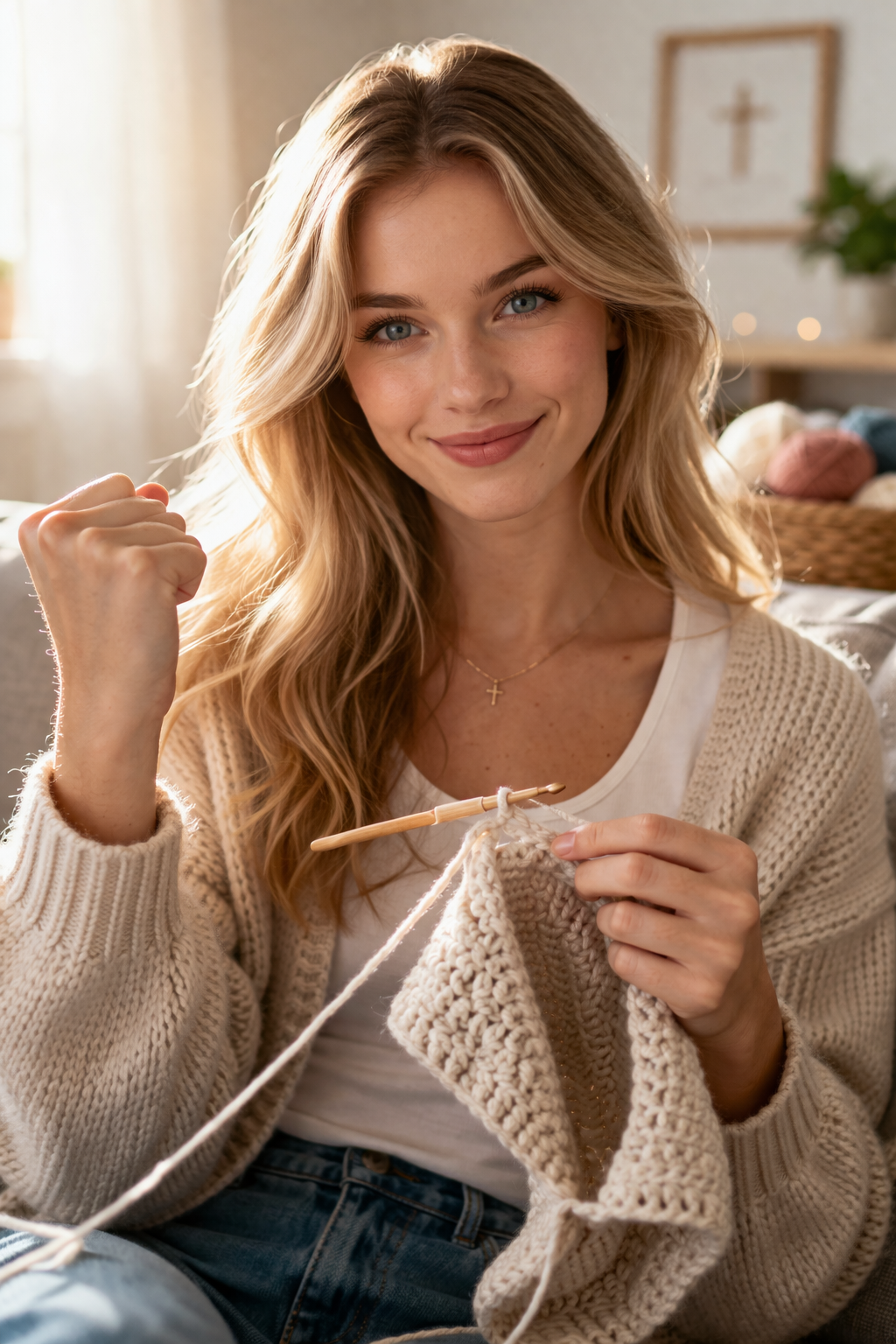
Crochet For Absolute Beginners

how-to-crochet-for-absolute beginners

Everything You Need to Start Crocheting With Confidence

This post may contain affiliate links, which means we may earn a small commission at no extra cost to you. We only recommend products we genuinely love and would use ourselves.

There’s something almost magical about crochet.

A simple strand of yarn and a single hook can become a cozy blanket, a soft scarf, a handmade gift, or even a future heirloom. Yet for many beginners, crochet can also feel intimidating at first. You may have watched videos, stared at crochet abbreviations, or wondered if your hands were “doing it wrong.”

Here’s the truth:

You do not need to be naturally crafty to learn crochet.

You do not need perfect tension, expensive supplies, or years of experience.

You simply need a willingness to begin.

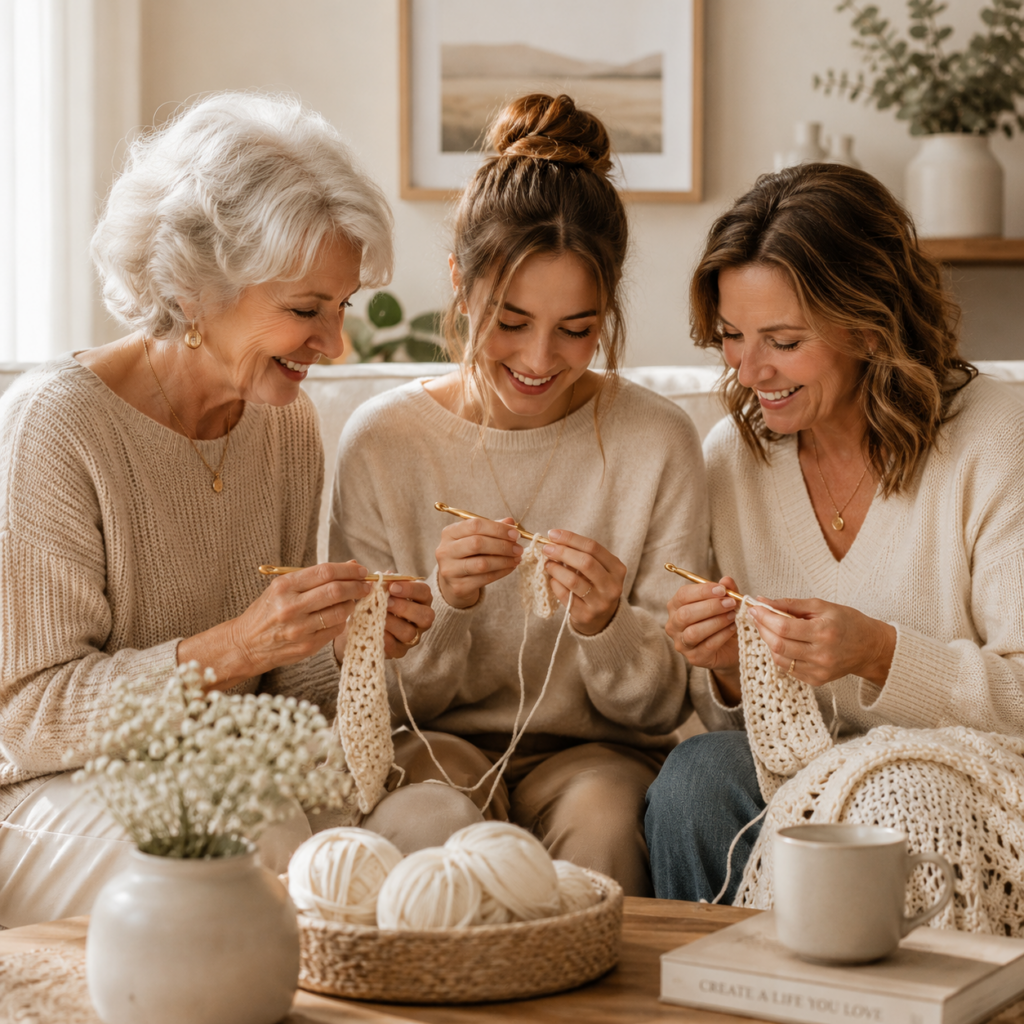
Whether you are 25 or 75, completely new to yarn crafts, or someone trying again after giving up years ago, this guide will walk you through the basics of crochet in a simple, encouraging way.

And most importantly: yes, you really can learn this.

Why Crochet Has Become So Popular Again

Crochet is no longer just a traditional hobby passed down from grandmothers. It has exploded in popularity again because people are craving slower, calmer, more meaningful activities.

Crochet allows you to:

  • Create beautiful handmade items
  • Reduce stress and anxiety
  • Step away from screens
  • Develop a creative skill
  • Make personalized gifts
  • Create wearable pieces and home decor
  • Build confidence through small accomplishments

For many people, crochet becomes more than a hobby. It becomes a peaceful rhythm in daily life.

And unlike many hobbies, crochet is relatively inexpensive to start.


What You Actually Need to Start Crocheting

One of the biggest beginner mistakes is overbuying supplies before learning the basics.

You do not need an entire craft room to begin.

Here’s all you really need:

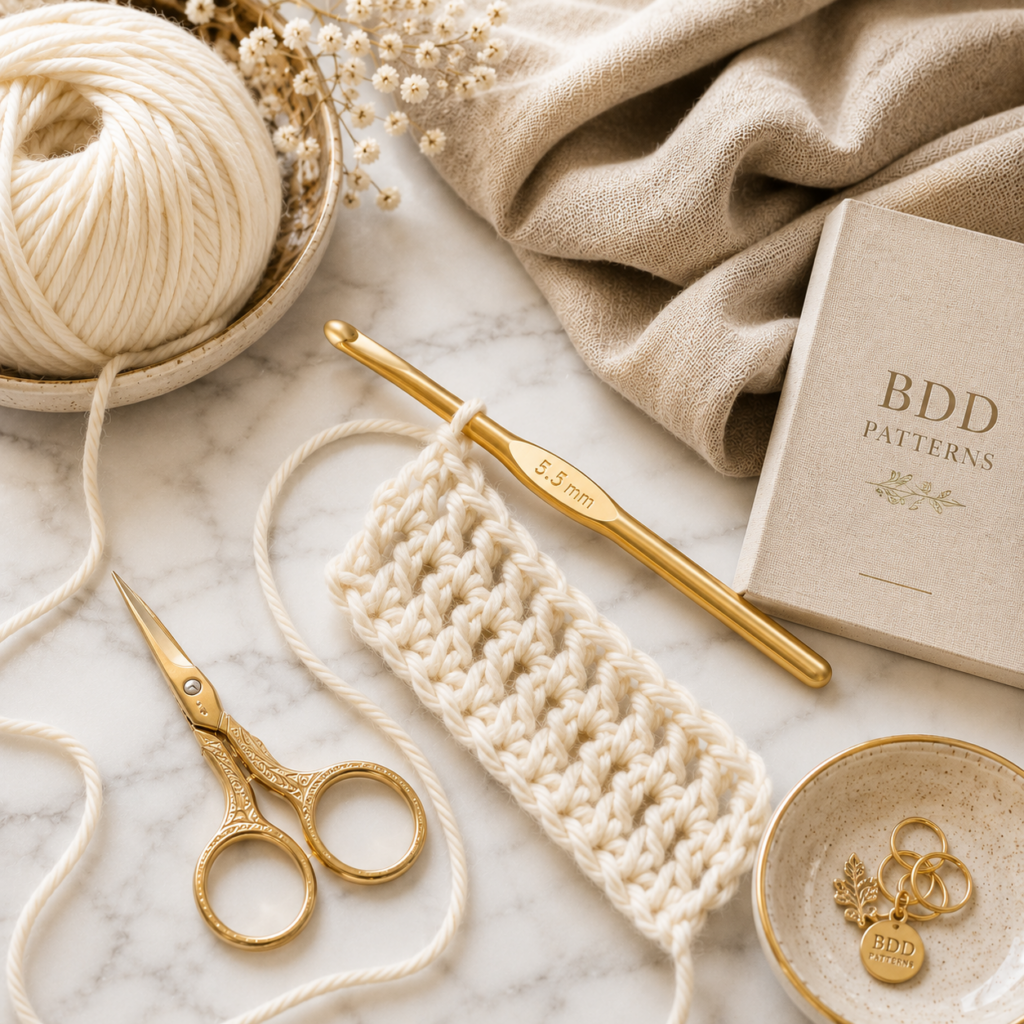
  • A crochet hook
  • Yarn
  • Small scissors
  • A yarn needle (optional at first)

That’s it.

Beginner Favorites Janet Recommends

Janet’s Favorite

Yarniss Ergonomic Crochet Hooks Set 3.0mm-6.0mm, Aluminum Crochet Needles with Beech Wood Handle for Arthritic Hands

  • Lightweigt Crochet Hooks Set for Beginne…
  • Comfortable Grip for Arthritic Hands:Str…
  • Double Polished Smooth Hook Heads:Every …
  • All-in-One Crochet Kit:Package includes …
  • Portable & Well Organized:The matched st…
Love This Yarn

Red Heart Soft Wheat Yarn - 3 Pack of 141g/5oz - Acrylic - 4 Medium (Worsted) - 256 Yards - Knitting/Crochet

  • Content: 100% Acrylic. This yarn is grea…
  • Ball Size: Each ball of this #4 Medium G…
  • “Knitting Gauge: 4” x 4” (10 cm x 10 cm)…
  • Red Heart is proud to be America’s Favor…
Janet’s Favorite

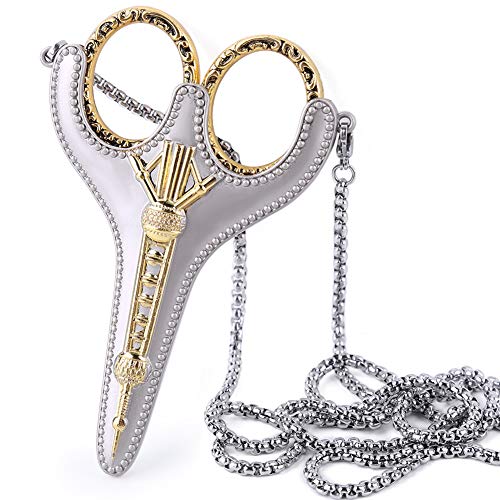
BUTUZE Embroidery Scissors, Exquisite Retro Scissors for Sewing, Stainless Steel Embroidery Sewing DIY Kit for Sewing, Cutting, Art Work, Embroidery, Needlework

  • Sewing Scissors High quality: Made of hi…
  • Embroidery Scissors Advantages: Metal re…
  • Beautiful Shape: Our metal paper scissor…
  • Durable, Top Quality: Provide you with m…

The Best Crochet Hook for Beginners

For most beginners, a medium-sized hook is easiest to learn with.

A great beginner size is:

  • 5.0 mm (H hook)
  • 5.5 mm (I hook)

These sizes are comfortable to hold and large enough to clearly see your stitches. Recommended Beginner Crochet Hooks

A smooth ergonomic hook can help reduce hand strain and make stitches easier to control while learning.

The Best Yarn for Beginners

Avoid very dark yarns, fuzzy yarns, or extremely thin yarns in the beginning.

Instead, choose:

  • Medium weight yarn (#4 worsted weight)
  • Light colors like cream, beige, soft gray, or dusty blue
  • Smooth yarn with visible stitch definition

Cotton blends and acrylic yarns are both excellent beginner options.

Easy-to-See Beginner Yarn Options

When learning crochet, lighter colored yarn with clear stitch definition makes a huge difference.

    Janet’s Favorite

    Caron One Pound Solids Yarn - (4) Medium Worsted Gauge 100% Acrylic - 6 oz - Off White - For Crochet, Knitting & Crafting

    • Content: 100% acrylic yarn, 4 worst weig…

    Caron All Day Cotton - 3 Pack of 173 Yards/3.52 oz Cream 100% Mercerized Cotton Yarn

    $49
    • Content: 100% mercerized cotton, Care: T…
    • Ball Size: 100g/3.52 oz, 158 m/173 yds, …
    • Knitting Gauge: 4″ x 4″ (10cm x 10cm) 20…
    • Caron yarn takes color inspiration from …
    Janet’s Favorite

    Lion Brand Yarn, Hue + Me Chunky Yarn for Crocheting, Knitting, and Crafts, Desert, 3 Pack

    • SOFT KNITTING YARN: Envisioned by Two of…
    • CROCHETING YARN: This blend is 80% acryl…
    • CHECK YOUR GAUGE: Knit stitches needed f…
    • EASY-CARE YARN: Items made from this woo…

    Understanding Crochet Hooks

    One of the first things beginners notice is that crochet hooks come in many sizes and materials.

    You’ll find:

    • Aluminum hooks
    • Wooden hooks
    • Ergonomic hooks
    • Plastic hooks
    • Steel hooks

    At first, this can feel overwhelming.

    But here’s the good news:

    The exact hook is far less important than simply becoming comfortable holding one.

    Many beginners think there is only one “correct” way to hold a crochet hook. That simply is not true.

    Some people hold their hook like a pencil. Others hold it like a knife.

    Both are correct.

    The goal is not perfection.

    The goal is comfort and stitch consistency.

    This is something we will cover more deeply in the upcoming YouTube beginner series, starting with:

    • How to hold a crochet hook
    • How to make your first chain

    These two skills are the true foundation of crochet.

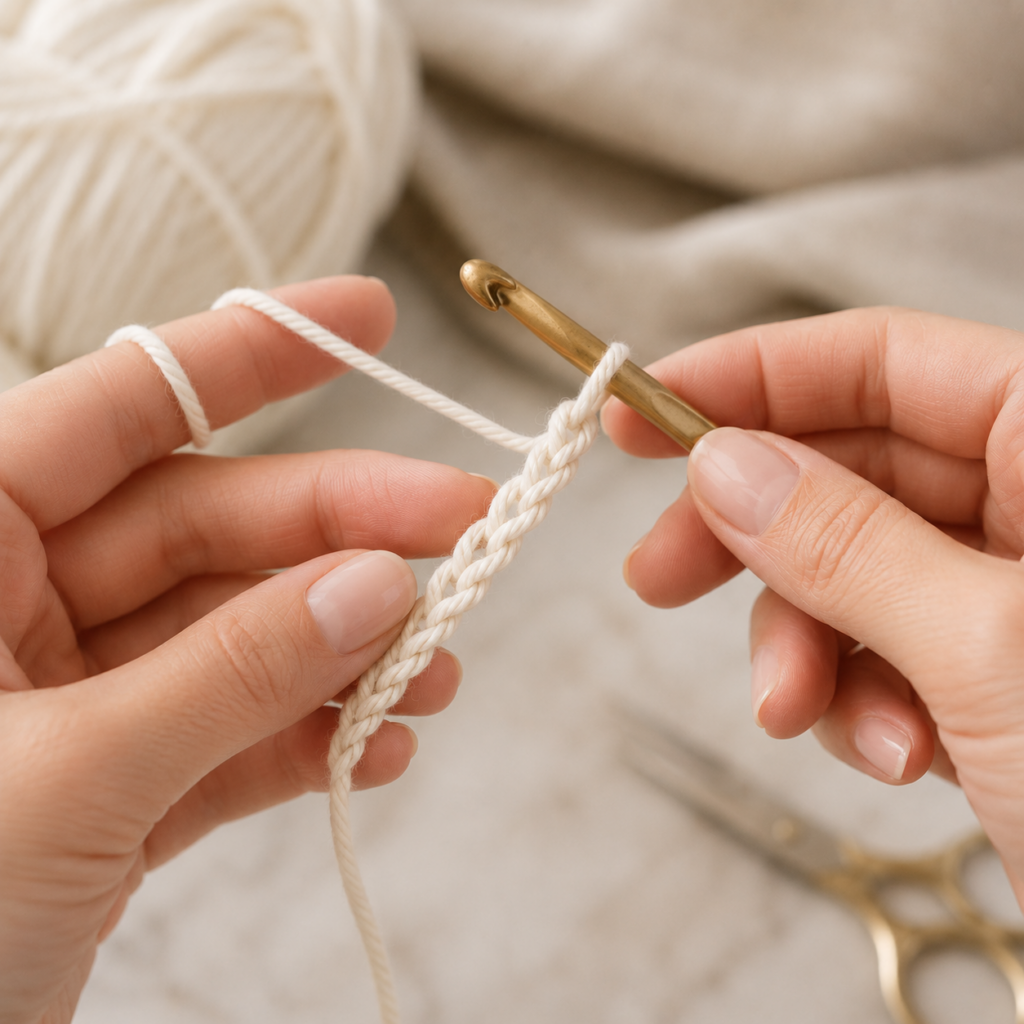
    The First Thing You’ll Learn: The Chain Stitch

    Every crocheter remembers their first chain.

    The chain stitch is usually the first stitch beginners learn because it teaches:

    • Hand positioning
    • Yarn tension
    • Hook control
    • Stitch rhythm

    At first, your chains may look:

    • Too tight
    • Too loose
    • Uneven
    • Twisted

    This is completely normal.

    Crochet is muscle memory.

    Your hands are learning a brand-new movement pattern, and that takes repetition.

    Most beginners improve dramatically after just a few practice sessions.
    The Biggest Beginner Crochet Mistakes

    Every beginner struggles in the beginning.

    The difference between people who succeed and people who quit is usually very simple:

    Successful beginners keep going through the awkward phase.

    Here are some of the most common beginner mistakes.

    1. Pulling the Yarn Too Tight

    This is probably the number one beginner issue.

    When stitches are too tight:

    • The hook becomes hard to insert
    • Hands become sore
    • Projects curl
    • Crochet becomes frustrating

    Relax your hands.

    Your stitches do not need to be perfect.

    2. Counting Incorrectly

    Many beginners accidentally add or lose stitches.

    This is normal.

    Even experienced crocheters occasionally miscount.

    Learning to count stitches is a skill that develops over time.

    3. Choosing Difficult Yarn

    Beginners often buy fuzzy or decorative yarn because it looks beautiful.

    Unfortunately, these yarns hide stitches and make learning much harder.

    Simple yarn is your friend in the beginning.

    4. Comparing Yourself to Experts

    One of the fastest ways to quit crochet is to compare your first chain to someone else’s ten years of experience.

    Every skilled crocheter was once a beginner.

    Every single one.
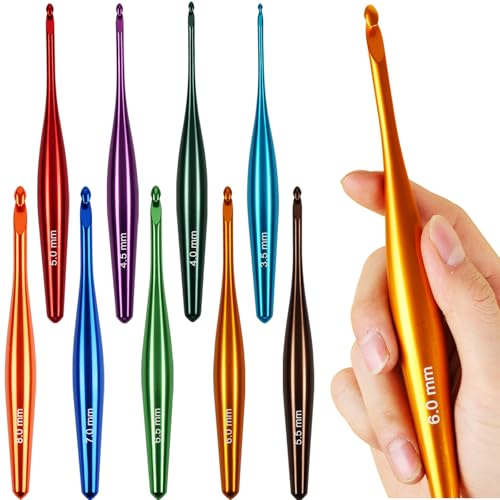
    My Favorite Aluminum Hooks

    Svartur Crochet Hooks Ergonomic, 9Pcs Hand-Polished Aluminum Crochet Needles (3.5mm-8mm), Streamline Crochet Hooks for Arthritic Hands, Multicolored Metal Knitting Needles with Storage Case

    • 【Premium Material & …
    • 【Ergonomic Comfort C…
    • 【Wide Range of Sizes…
    • 【Durability & Qualit…

    Glocusent Book Light, 3-Color & 6-Brightness Reading Light, Bendable Neck Light, 80-hr Lasting Rechargeable Book Light, Perfect Reading Lights for Books in Bed, Knitting, Repairing, Book Lovers Gifts

    • [3 Colors & 6 Brightness Adjustable] Thi…
    • [Rechargeable & Long-Lasting] This bed r…
    • [Ergonomic & Hands-Free Design] The arms…
    • [Partner Friendly & Versatile] Unlike ot…
    Janet’s Favorite

    Copper Compression Arthritis Gloves | Fingerless Arthritis Carpal Tunnel Pain Relief for Men & Women | Hand Support Wrist Brace for Neuropathy, Rheumatoid, Tendonitis, Swelling, Crocheting, Typing (L)

    • FIND THE STRENGTH TO…
    • COPPER INFUSED FIBER…
    • AVAILABLE IN 5 SIZES…
    • EASY TO CARE FOR. Th…

    Crochet Is About Progress, Not Perfection

    One of the beautiful things about crochet is that improvement is visible.

    Your first rows may wobble.

    Your tension may change.

    Your edges may lean sideways.

    And then suddenly one day, your stitches begin to look consistent.

    Your hands relax.

    Your rhythm develops.

    You stop thinking about every movement.

    That transformation happens through practice, not perfection.
    The Best Beginner Crochet Projects

    Many beginners make the mistake of starting with projects that are too advanced.

    Start simple.

    Simple projects build confidence.

    Dishcloths

    Dishcloths are excellent beginner projects because:

    • They are small
    • They work up quickly
    • Mistakes are not noticeable
    • You practice basic stitches repeatedly

    Scarves

    Scarves are another fantastic starting point.

    You mainly practice:

    • Rows
    • Stitch consistency
    • Tension

    Plus, scarves are forgiving.

    Blankets

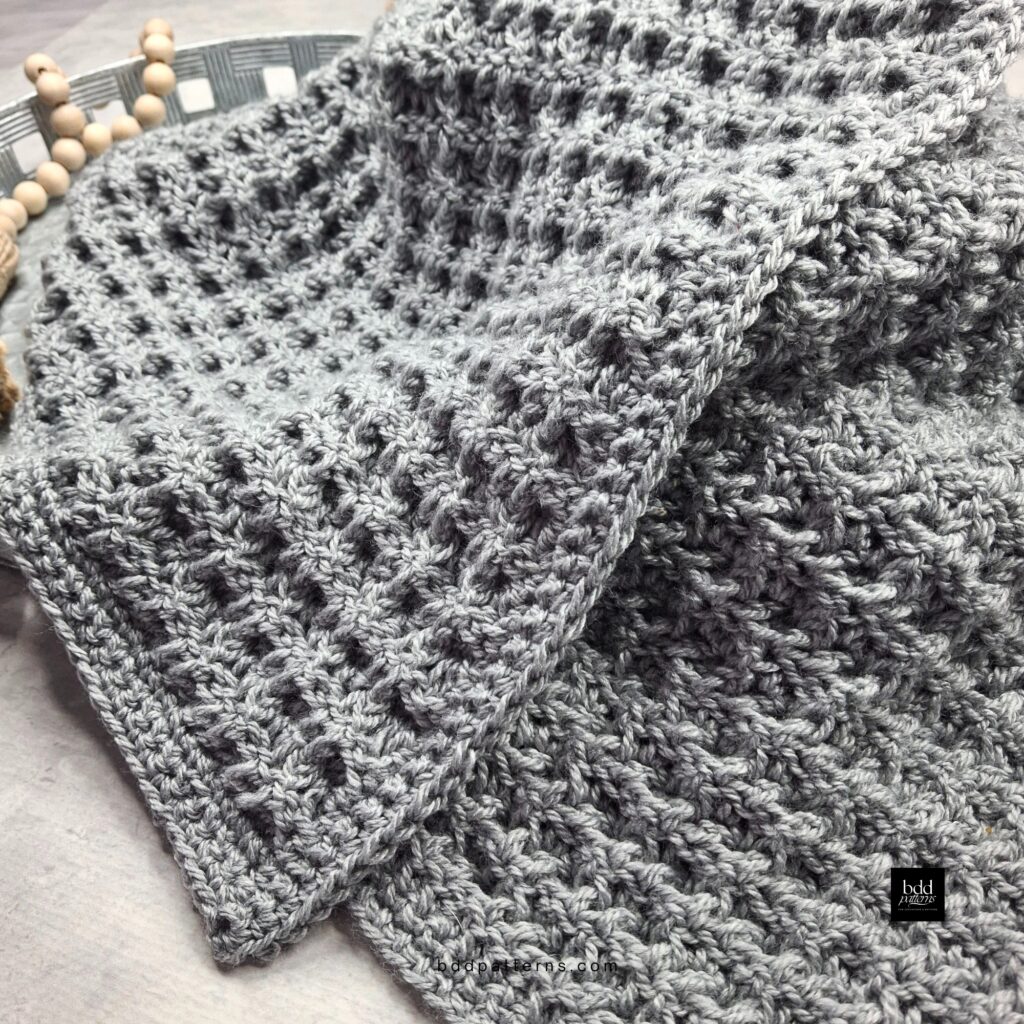
    Simple blankets are wonderful beginner projects because they teach repetition and rhythm.

    Large blankets may seem intimidating, but many are simply the same stitches repeated over and over.

    A blanket can actually become relaxing once you understand the basics.
    Why Many Beginners Quit Too Early

    Crochet has a learning curve.

    The first few days can feel frustrating because your brain and hands are trying to coordinate new movements simultaneously.

    This stage is temporary.

    Most beginners quit right before things begin to click.

    If you feel discouraged, remember:

    • Your hands are learning
    • Uneven stitches are normal
    • Tension improves naturally
    • Speed comes later

    You are not failing.

    You are learning.


    Crochet Terminology Beginners Should Know

    When you first look at a crochet pattern, it may feel like another language.

    Here are a few common beginner terms:

    • ch = chain
    • sc = single crochet
    • dc = double crochet
    • sl st = slip stitch
    • st = stitch

    At first, abbreviations can look intimidating.

    But after a little practice, reading patterns becomes much easier.

    In the beginning, video tutorials are incredibly helpful because you can watch each movement step-by-step.

    That’s why our beginner crochet YouTube series will start with the true foundations before moving into larger projects.
    Building Confidence as a Beginner Crocheter

    Confidence in crochet does not come from perfection.

    It comes from finishing things.

    Even small things.

    Your first uneven dishcloth matters.

    Your crooked scarf matters.

    Your wobbly rows matter.

    Because every finished project teaches you something.

    Crochet is not about being perfect immediately.

    It is about learning one small skill at a time.

    And once those skills stack together, you suddenly realize:

    You can actually make beautiful things.


    A Gentle Reminder for Beginners

    If you are learning crochet later in life, please do not believe the lie that it is “too late” to start.

    Many people begin crochet:

    • After retirement
    • During difficult seasons
    • While healing from stress
    • While searching for a creative outlet
    • Simply because they always wanted to try

    Creativity does not have an age limit.

    Your hands do not need to move perfectly.

    You do not need natural talent.

    You simply need patience with yourself.

    And while crochet may seem small to some people, there is something deeply meaningful about learning to create with your hands again.

    Crochet Can Become More Than a Hobby

    For some people, crochet remains a relaxing pastime.

    For others, it becomes:

    • A creative outlet
    • A side income
    • A handmade gift business
    • A meaningful daily routine
    • A source of peace and accomplishment

    Many crocheters discover that crochet slows the mind in the best possible way.

    The repetitive motion can feel calming and grounding after a stressful day.

    There is also something deeply satisfying about creating something tangible in a fast-moving digital world.
    The Importance of Learning the Foundations Correctly

    One reason beginners become frustrated is because they try advanced projects too early.

    Before jumping into:

    • Sweaters
    • Wearables
    • Complex stitches
    • Fancy yarns

    …it’s important to build strong foundations first.

    That’s exactly why our upcoming beginner crochet series will begin with:

    1. How to hold a crochet hook
    2. How to make your first chain
    3. Understanding tension
    4. Your first stitches
    5. Simple beginner projects

    These foundational skills make everything else easier later.

    And once you master them, the world of crochet opens up dramatically.


    Final Thoughts: You Are Capable of Learning Crochet

    If you take nothing else from this article, remember this:

    You do not need to crochet perfectly to be a crocheter.

    You simply need to begin.

    Every skilled crocheter once struggled with:

    • Tight chains
    • Uneven rows
    • Confusing stitches
    • Hand tension
    • Frustration

    The difference is that they kept practicing.

    And you can too.

    Crochet is learned one stitch at a time.

    One row at a time.

    One small project at a time.

    So pick up the hook.

    Practice the chain.

    Allow yourself to be a beginner.

    Because somewhere between that first uneven stitch and your future handmade blanket, you may discover a hobby that brings creativity, peace, confidence, and joy into your everyday life.

    And honestly?

    That first chain is where it all begins.
    Posted on

    The Right Way to Crochet (and Why There Isn’t Just One)

    the right way to crochet

    Finding confidence, freedom, and joy in your stitches


    If you’ve ever been told…

    • “You crochet weird.”
    • “That’s not the right way.”
    • “I can’t follow you—you’re doing it wrong.”

    …then this post is for you.

    Because I’ve heard those same words too.

    And if I’m being honest? The first feeling is a quick flash of anger.
    But right after that… it turns into something else.

    Sadness.

    Not for me—but for the beginner sitting on the other side of the screen, quietly wondering if they’re doing everything wrong… and maybe thinking about quitting.

    And that’s something I will never be okay with.

    the right way to crochet

    Let Me Say This Clearly: There Is Not Just One Right Way to Crochet

    There is a right outcome in crochet.

    But there is not just one right way to get there.

    And that distinction matters more than most people realize.

    Here’s what I believe with my whole heart:

    The right way to crochet is to create the correct stitch structure—but how you get there is personal.

    Janet’s Favorite

    The Complete Book of Crochet Stitch Designs: 500 Classic & Original Patterns (Complete Crochet Designs, 1)

    • Lark Books-Complete Book Of Crochet Stit…

    That means:

    • How you hold your hook ✔
    • How you wrap your yarn ✔
    • How you tension your yarn ✔
    • Whether your yarn goes over or under ✔

    These things are deeply personal.

    They are shaped by:

    • Your hands
    • Your comfort
    • Your coordination
    • Your experience
    • Even how you were first taught (or not taught)

    And that’s exactly what makes crochet… handmade.


    Why This Conversation Matters (Especially for Beginners)

    Most of my audience is:

    • Beginners
    • Self-taught crocheters
    • Women who didn’t grow up with someone showing them the ropes

    And I want to say something directly to you:

    You are not behind. You are not wrong. You are learning.

    Janet’s Favorite

    Yarniss Ergonomic Crochet Hooks Set 3.0mm-6.0mm, Aluminum Crochet Needles with Beech Wood Handle for Arthritic Hands

    • Lightweigt Crochet Hooks Set for Beginner:This practical set of crochet hooks is built with durable aluminum and natural beech wood. The premium dual-material design makes these crochet needles lightweight and easy to hold, ideal daily crochet supplies for all craft lovers.
    • Comfortable Grip for Arthritic Hands:Streamlined ergonomic handles fit hands perfectly. Say goodbye to hand fatigue even after hours of crocheting, friendly for all users.
    • Double Polished Smooth Hook Heads:Every aluminum hook head is double polished to create an ultra-smooth surface. These crochet hooks glide effortlessly through all kinds of yarn without snags, bringing you a fluent and pleasant crocheting experience.
    • All-in-One Crochet Kit:Package includes 7 crochet hooks (3.0mm-6.0mm), 6 knitting needles, 10 stitch markers and 1 felt storage bag, full crochet tools for your craft needs.
    • Portable & Well Organized:The matched storage case keeps all crochet supplies tidy. Compact and portable, suitable for home, travel and gifting to crochet beginners.

    When someone tells you there’s only one “correct” way to crochet, it can feel intimidating.

    It can make you second-guess every stitch.

    It can steal the joy right out of your hands.

    And too often…

    👉 It makes people quit.

    That’s the part that breaks my heart.

    Because crochet should feel:

    • Peaceful
    • Creative
    • Satisfying
    • Encouraging

    Not stressful. Not rigid. Not like you’re being graded.

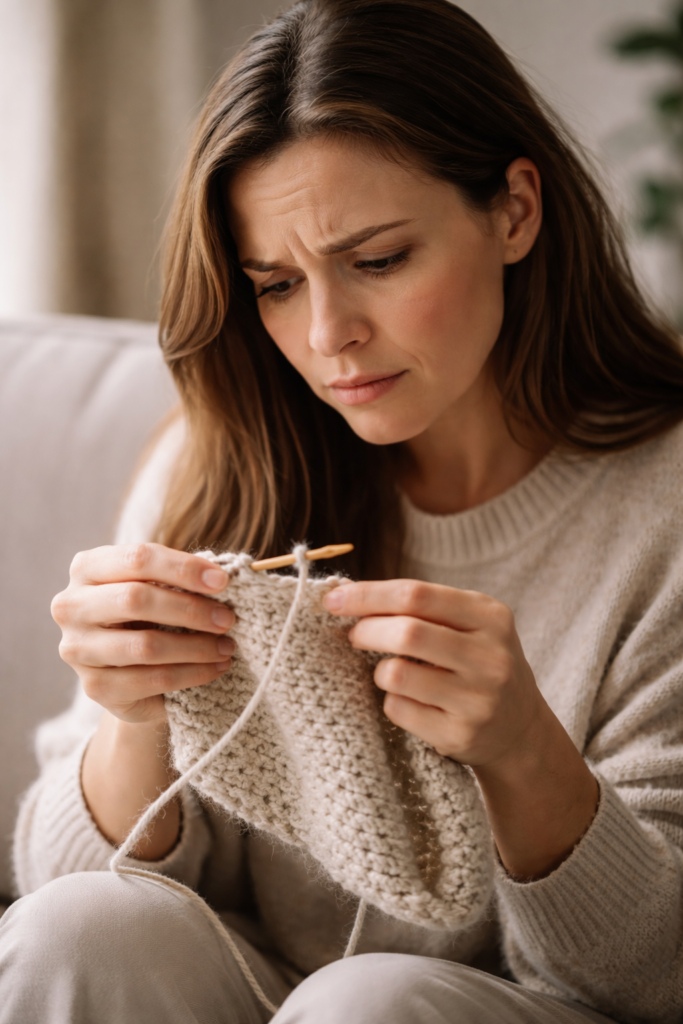
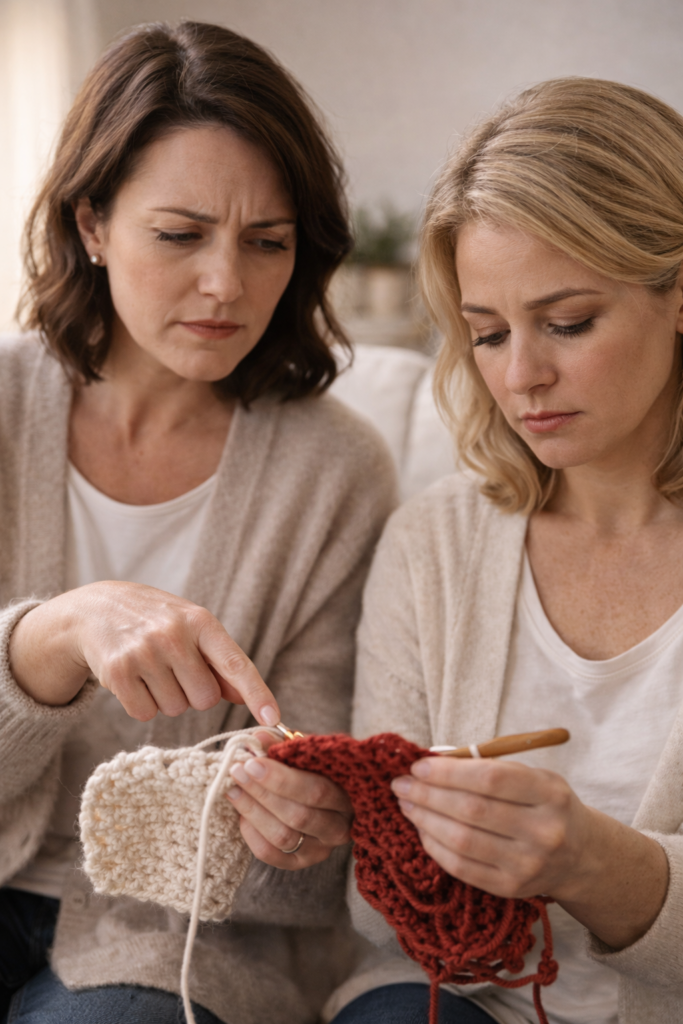
    frustrated crocheter

    The Truth About Technique: Personal, Not Prescriptive

    Let’s talk about one of the biggest debates in crochet:

    Yarn Over vs Yarn Under

    You’ve probably seen it.

    Some crocheters wrap their yarn one way…
    Others do it differently.

    And then the comments come:

    • “That’s not right.”
    • “You’re doing it backwards.”
    • “You need to fix that.”

    But here’s the truth:

    In many cases, both methods can produce the same stitch structure.

    Janet’s Favorite

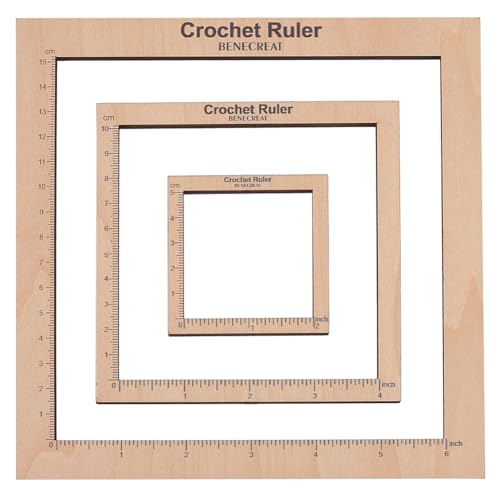
    BENECREAT 3 Styles Crochet Ruler Square Ruler Knitting 2" 4" 6" Guide Knitting Tool Sewing Measure Tailor Ruler for Measuring Crochet Accessories

    • Size Reference: 3pcs 3 sizes. Small: 63.5×63.5x5mm/2.5×2.5×0.2″, inner diameter: 50x50mm/2×2″. Middle: 120x120x5mm/4.7×4.7×0.2″, inner diameter: 101x101mm/4×4″. Large: 185x185x5mm/7.2×7.2×0.2″, inner diameter: 152x152mm/6x6inch
    • Most Applicable: the measurement unit at the bottom is inch, and the centimeter is marked on the left, which makes this ruler apply to most tailors and handicraft producers.
    • Premium Quality: Made of high -quality wood, the surface is smooth and without burrs. The thickness of 5mm is much strong and durable, which can improve efficiency for a long time.
    • Perfect 90 Degree: They can not only measure, but also easily create 90° angle handicraft products. It is essential to ensure the balance of the project.
    • Multifunctional: Clearly marked and multi-functional, you can quickly determine the needle number and yarn size. A perfect multifunctional sewing knitting tool for everyday life.

    If your stitch:

    • Has the correct loops
    • Matches the intended design
    • Looks consistent across your work

    👉 Then you are achieving the correct result.

    Now—does that mean anything goes?

    No.

    There are moments where technique matters more (we’ll talk about that next).
    But in many everyday stitches, the path you take to get there can vary.

    And that’s okay.

    Actually…

    That’s beautiful.


    Where Precision DOES Matter (And Why It’s Important)

    Now let’s bring balance into this conversation.

    Because while crochet is personal…

    👉 It is also a craft with structure.

    And there are non-negotiables.

    1. Gauge Matters

    If a pattern calls for a specific gauge, it’s not a suggestion.

    It affects:

    • Fit
    • Size
    • Drape
    • Overall success of the project

    You can crochet in your own style—but your gauge must match the pattern.


    2. Stitch Count Matters

    Missing or adding stitches will change:

    • Shape
    • Alignment
    • Final outcome

    Freedom in technique does not mean freedom in counting.


    3. Construction Matters

    Patterns are built intentionally.

    Things like:

    • Where increases happen
    • How pieces are joined
    • The order of steps

    👉 These are not optional.


    4. Stitch Structure Matters

    Even if your yarn movement is different…

    The final stitch must still be:

    • Recognizable
    • Functional
    • Consistent

    Janet’s Favorite

    Ninja Luxe Café Pro Series, Espresso Machine, Drip Coffee, Cold Brew, Hot Water, Integrated Tamper, Built-in Grinder, Hands-Free Frother for Cappuccinos, Lattes, Americanos, Dairy or Non-Dairy, ES701

    • 4 MACHINES IN 1: Brew without limits wit…
    • BARISTA ASSIST TECHNOLOGY: Unlock the ul…
    • INTEGRATED TAMPER: Tamp your grounds eas…
    • DUAL FROTH SYSTEM PRO: Unlock more froth…

    So What Does This Mean?

    Bring your personal hand to the process—but respect the structure of the pattern.

    That’s the balance.

    That’s the art.

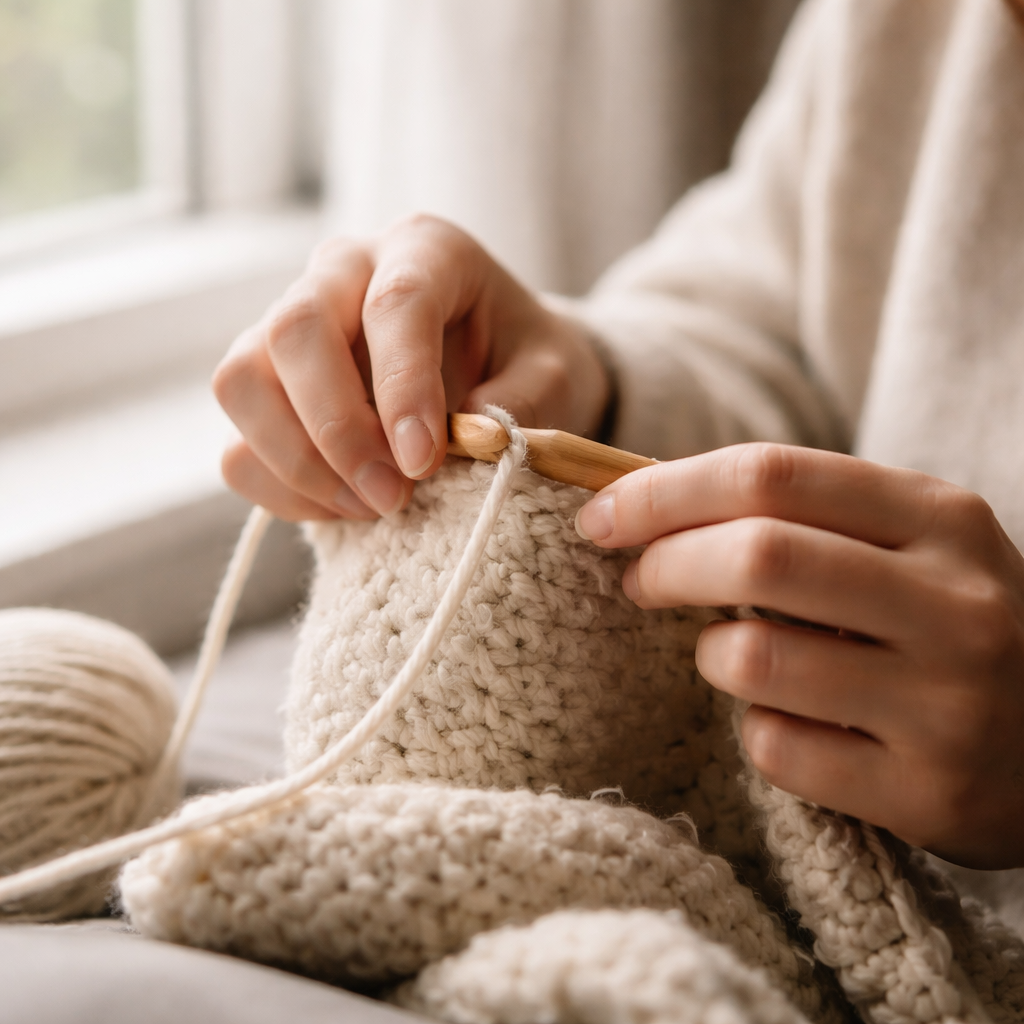
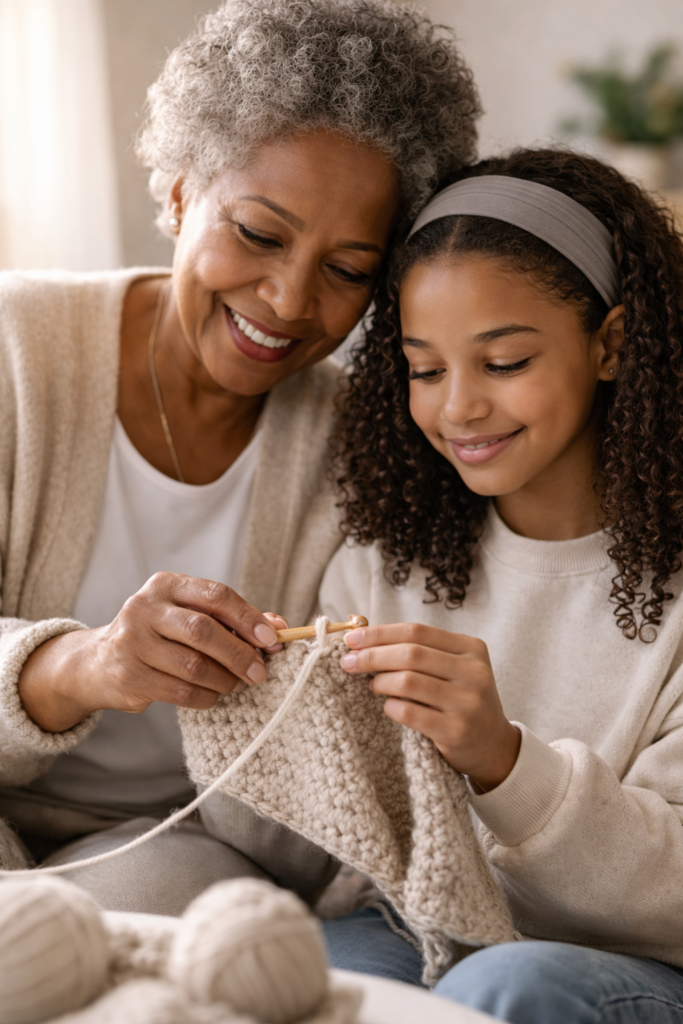
    Grandmother and granddaughter crocheting

    The Essence of Handmade

    Here’s something I want you to really sit with:

    If every crocheter worked exactly the same way… handmade wouldn’t exist.

    It would just be manufacturing.

    The small differences in how we:

    • Hold our hook
    • Move our hands
    • Tension our yarn

    👉 That’s what gives crochet its soul.

    Your stitches carry you in them.

    And no one else can replicate that exactly.


    Let’s Talk About “Persnickity Crocheters”

    You’ve probably encountered them.

    I call them persnickity crocheters.

    They are the ones who:

    • Need to be right
    • Point out “faults” constantly
    • Correct without encouraging
    • Prioritize rules over people

    And I want to be very clear about something:

    That is not the kind of community I am building here.

    Clover Antique Yarn Threader-, 5.1" Height, 2.8" Length x 0.5" Width, Brown

    • Fancy and practical at the same time
    • Novice to expert knitters will enjoy
    • elegance and the usefulness of these too…
    • Designed to easily thread yarn through y…

    I believe in:

    • Encouragement over criticism
    • Teaching over shaming
    • Growth over perfection

    Because here’s the truth:

    When someone feels safe…

    👉 They improve faster.
    👉 They stay longer.
    👉 They enjoy the process.

    And that’s what matters.


    A Gentle Faith Reminder (For the Heart)

    If you’re someone who walks in faith, let me offer you this quiet encouragement:

    “Let everything you do be done in love.” — 1 Corinthians 16:14

    Even in crochet.

    Especially in crochet.

    We are not here to:

    • Tear down
    • Prove superiority
    • Create fear

    We are here to:

    • Build up
    • Encourage
    • Create with joy

    And that includes how we speak to one another—even in something as simple as yarn and a hook.


    What I Want You to Walk Away With

    If you remember nothing else from this post, remember this:

    1. If your stitches look right, you’re doing it right

    The end result matters more than the exact motion.


    2. Consistency matters more than method

    Pick what works for you—and stay consistent.


    3. Crochet should feel peaceful, not stressful

    If it feels heavy, something needs to change.


    4. Your way is not “wrong”—it’s yours

    And that matters.


    5. You are allowed to learn without fear

    You don’t need permission to grow.


    To the Beginner Who Feels Unsure…

    If you’ve ever sat there thinking:

    • “Am I doing this wrong?”
    • “Why does mine look different?”
    • “Maybe I’m just not good at this…”

    Let me say this to you, clearly:

    You are doing better than you think.

    Every crocheter you admire once:

    • Held the hook awkwardly
    • Struggled with tension
    • Frogged projects over and over

    They didn’t quit.

    And neither should you.


    A Final Thought (From Me to You)

    Crochet is not just a skill.

    It’s:

    • A rhythm
    • A comfort
    • A quiet place
    • A form of expression

    And there is room in it for you—exactly as you are.

    So no…

    There is not just one right way to crochet.

    But there is a right way to approach it:

    With patience. With grace. And with joy.

    Happy Crocheter

    Reflective Note

    I believe that the most beautiful things are not made by perfection—but by persistence.

    So pick up your hook.

    Wrap your yarn the way that feels natural.

    And keep going.

    Because your stitches?
    They are already telling a story worth finishing.